Skip to content

In today’s modern market, sustainable packaging has become a top trend across every industry. Therefore, brands are shifting towards sustainable packaging materials. To meet the packaging needs of brands, packaging companies are using various materials to not only protect the environment but also protect products.
These recyclable packaging boxes are made of cardboard, kraft, cardstock, bux board, and other renewable packaging materials. These eco-friendly materials depend on the cost, durability, and recyclable nature of any custom product packaging. In this article, we will guide you about the details of the top eco-friendly packaging materials to help brands spread a positive brand message.
Why are Eco-Friendly Packaging Materials Important?
Whether e-commerce brands or retail brands, all must choose eco-friendly materials to manufacture their product packaging. These materials are popular because of their range of benefits and multiple features. They are food-grade to keep food fresh, robust to keep delicate items safe, and luxury yet premium to meet the packaging needs of valuable products.
Apart from the product presentation and protection, packaging boxes made of these renewable materials show the Eco-conscious brand image. With the help of these boxes, brands can win the hearts of the modern world’s customers.
Let’s learn about the different types of packaging materials that are harmless to the environment and protective for products.
1. Compostable Packaging
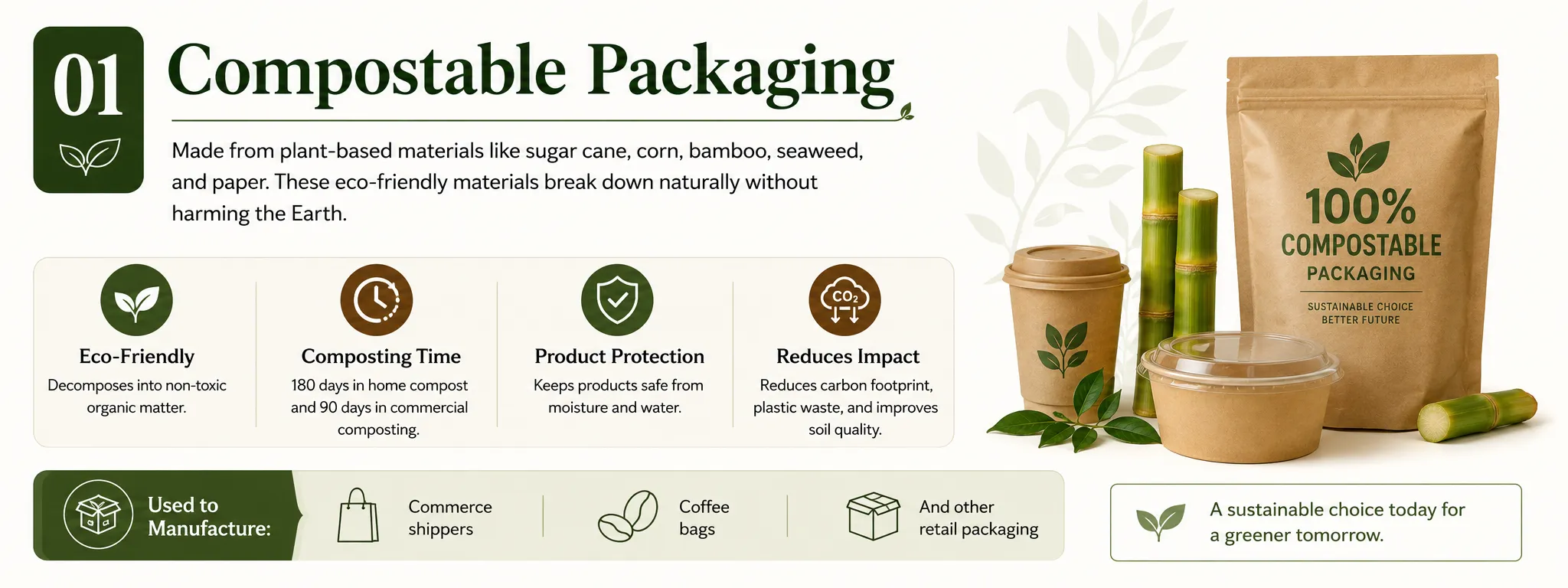
Compostable packaging materials are made of various plant-based raw materials, including sugar cane, corn, bamboo and others bio-poly mailers. Some of them are made of seaweed and paper. These packaging materials are ideal for both products and the environment, and decompose into the Earth without leaving any harmful impact.
These materials break down into non-toxic organic matter under the specific composting conditions. They take 180 days in a home compost and 90 days in commercial composting conditions.
By using these packaging materials, brands can improve their brand image, keep their products safe from moisture and water, and reduce their carbon footprints. These eco-friendly packaging materials can reduce plastic waste, enhance the yield of chemical fertilisers, and improve soil quality. These materials are used to manufacture:
- Commerce shippers.
- Coffee bags.
- And other retail packaging.
2. Recycled Paper and Plastic Packaging
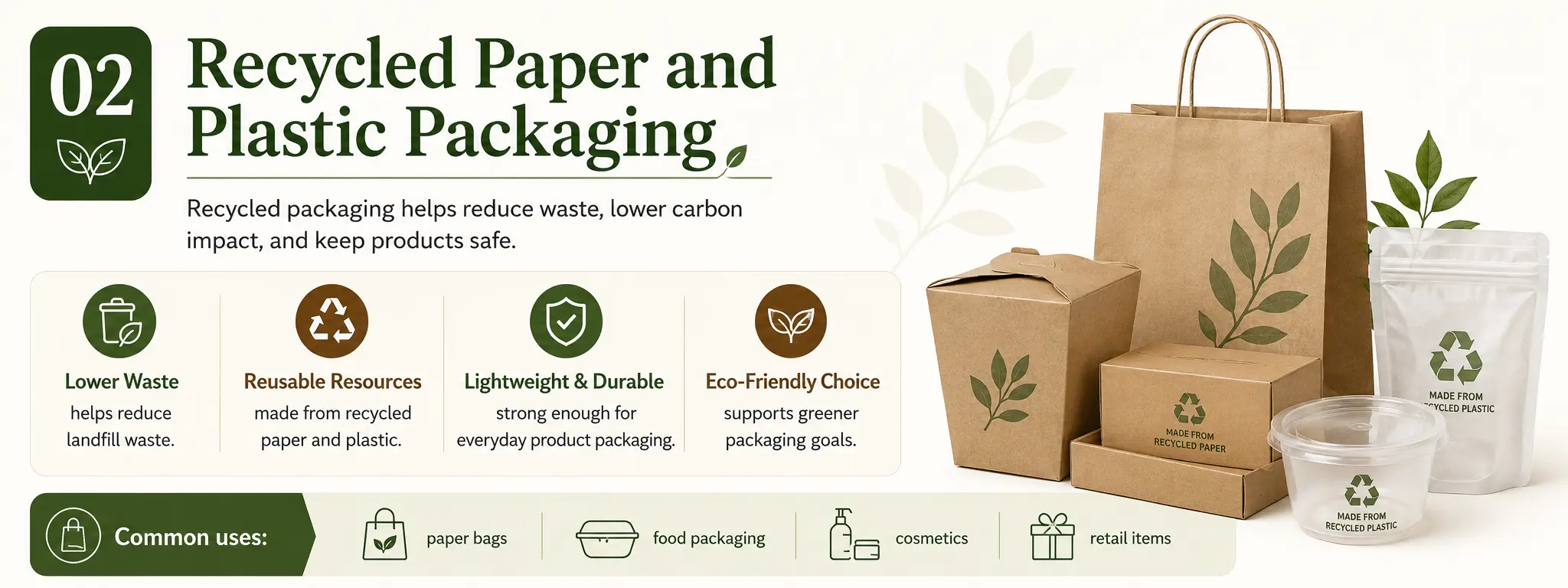
Recyclable packaging materials are also a safe storage option for products, helping brands to reduce their carbon footprint. These materials can be recycled again and again to decrease the waste of product packaging. Recyclable paper materials reduce the landfills and also keep the Earth safe from pollution. These lightweight materials are not only lightweight and robust but also top eco-friendly materials to keep the products safe from damage, and also allow brands to play their role in keeping the Earth green.
They are used to manufacture various types of custom eco packaging, such as paper bags for the shipping of products and product packing, such as food items, cosmetics, and retail items.
3. Recyclable Cardboard Packaging Materials
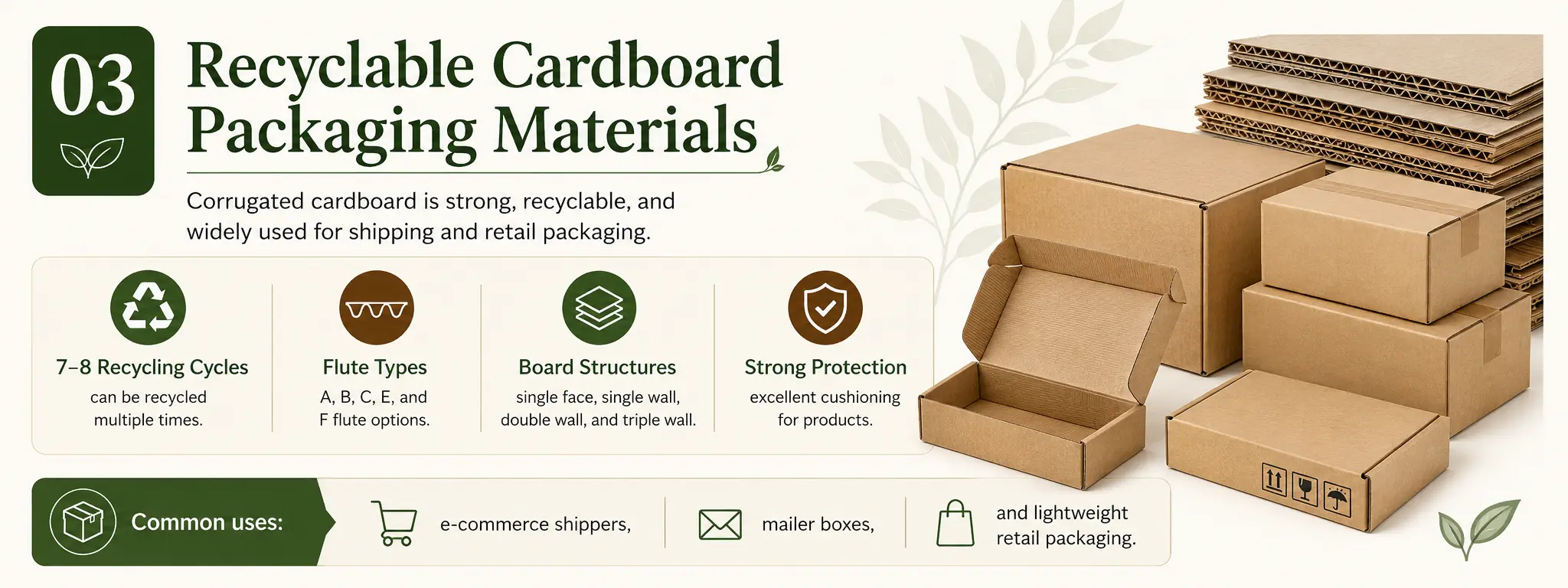
Corrugated cardboard packaging materials have a large number of recycling periods. They can recycle 7 to 8 times to manufacture product packaging after complete use. Along with perfect sustainable natures, corrugated stock is also available in various thickness ranges to help brands meet their product packaging needs, such as:
- A Flute Corrugated Stock
- B Flute Corrugated
- C Flute Corrugated
- E Flute Corrugated
- F Flute Corrugated Cardboard Materials
These materials also create various layers after combinations, such as single face board, single wall corrugated board, double, and triple wall corrugated board. Along with their excellent thickness and robust structure, these materials are also popular in the industry because of their eco-friendly nature. With the help of these materials, the brand manufactures recyclable cardboard packaging.
In various industries, these materials are used to meet the packaging needs of e-commerce brands’ shipping boxes and lightweight packaging for small retail items.
4. Kraft Stock for Eco-Friendly Packaging
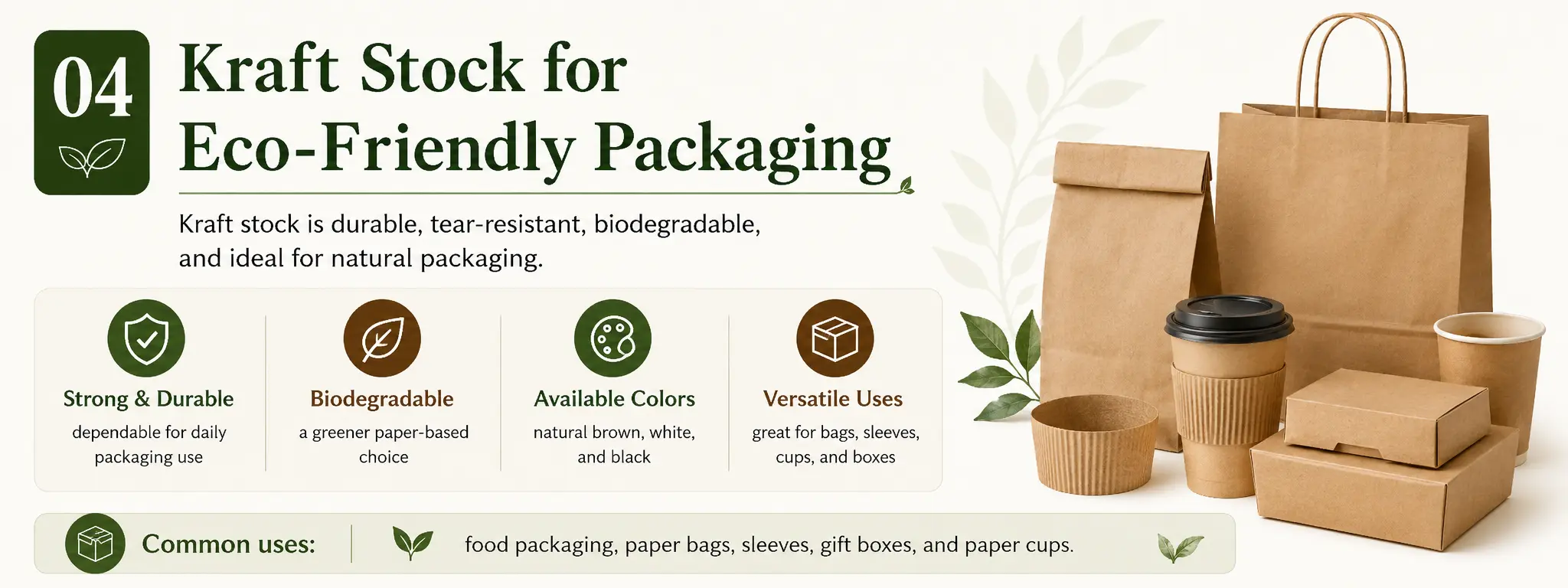
Kraft is a robust and one of the top eco-friendly materials made of wood pulp. They have excellent durability, are tear-resistant, and have a biodegradable nature. Kraft is one of the top-ranking and most used eco-friendly packaging materials to manufacture various types of custom printed paper bags, sleeves, and packaging boxes. Kraft is also available in various types, such as coated and uncoated forms, and various colors, such as white, black, and natural brown.
Like the cardboard materials, kraft stock is used to manufacture different types of product packaging, including food packaging, paper bags, sleeves, and paper cups. They are FSC-certified packaging materials and best for direct food and organic product packaging, kraft gift boxes, and other natural paper packaging, releasing no toxic chemicals into the Earth.
5. Bux Board: Eco-Friendly Packaging Material
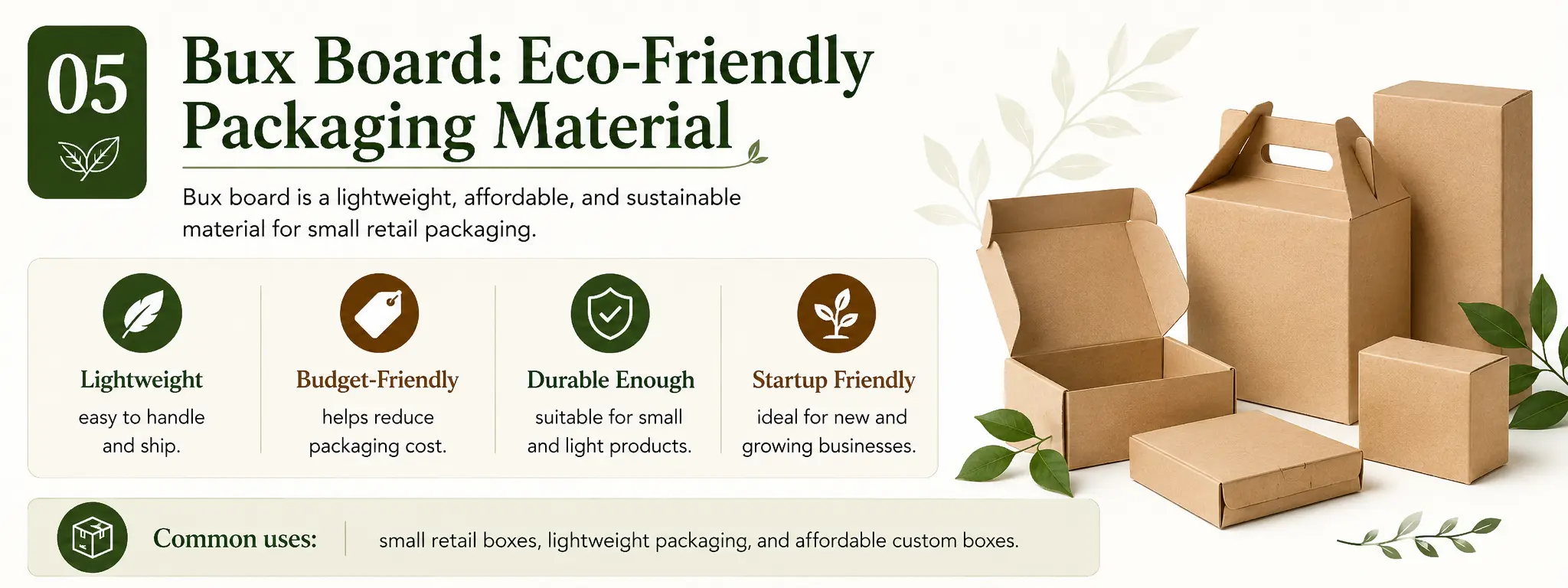
Bux board is a lightweight, durable, and is one of sustainable packaging solutions to create affordable custom boxes for various lightweight and small retail items. They are the right solutions for brands that want to meet their product packaging needs at affordable rates without compromising sustainability. For startup businesses, Eco-conscious packaging brands manufacture bux board packaging for their desired products.
6. Chipboard Packaging
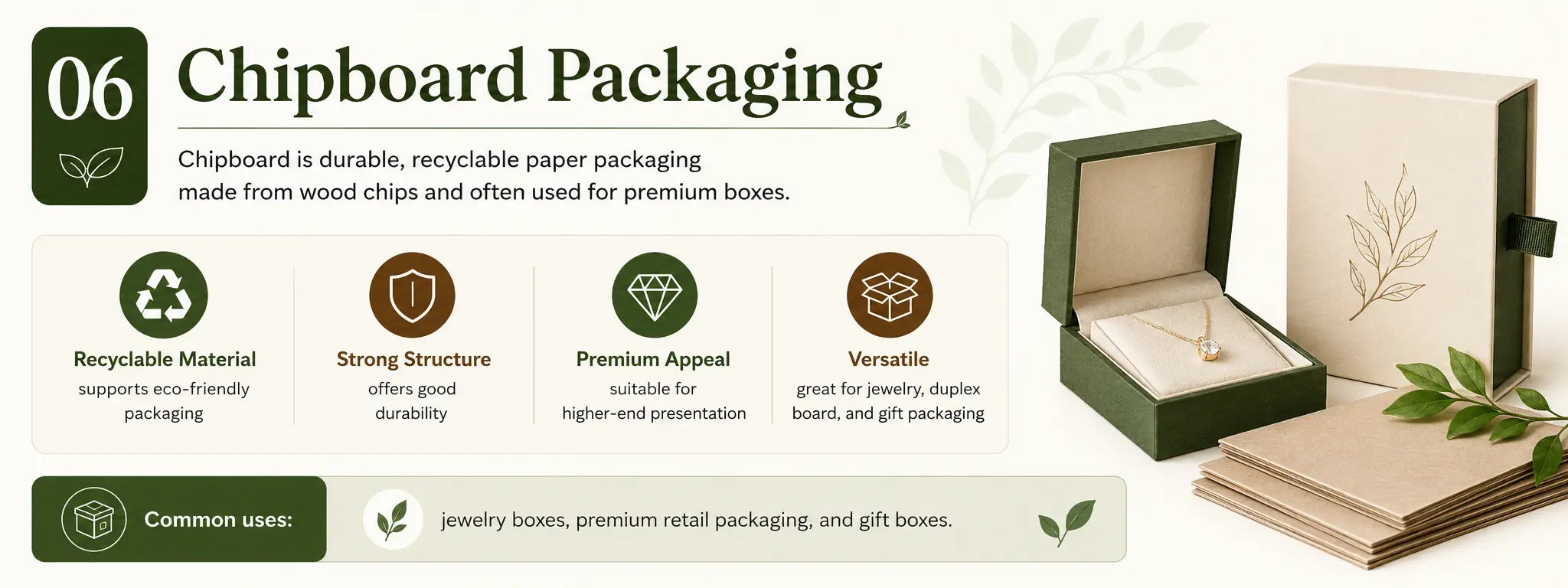
When it comes to the recyclable paper packaging which ensures durability and environmental friendliness, chipboard packaging is at the top list. These materials are manufactured from wood chips, providing excellent durability.
Most of the high-end products’ earth-friendly packaging is made of these materials, such as duplex board. Therefore, packaging companies produce premium packaging from these high-end and robust materials, such as custom jewelry packaging. These materials can be recycled to produce other types of packaging materials and leave no harmful impact on the Earth.
7. Cardstock Packaging Materials
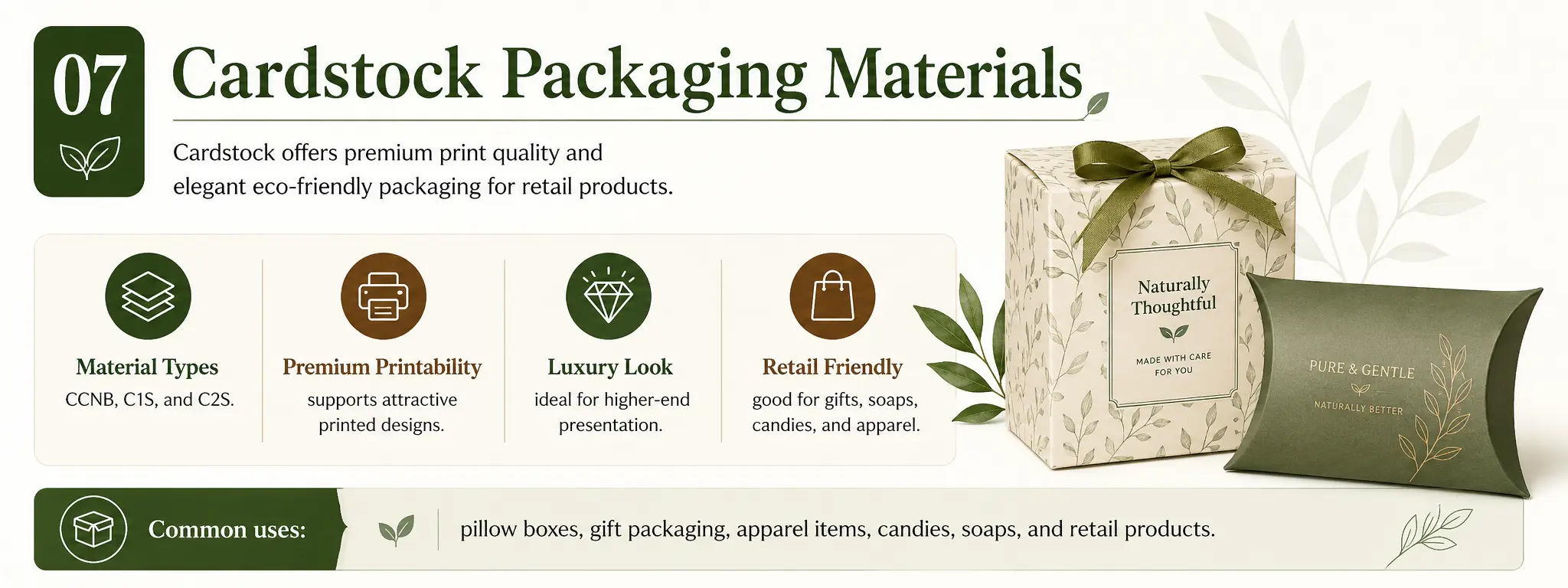
Cardstock is the right and luxury packaging solution for those brands that have enough budget and want to offer their products in appealing and eco-friendly packaging. This material is available in various types, such as CCNB, C1S, and C2S forms, to meet the various premium packaging needs of products, such as custom printed pillow boxes for gifts, apparel items, candies, soaps, and other retail products.
8. Glassine Packaging
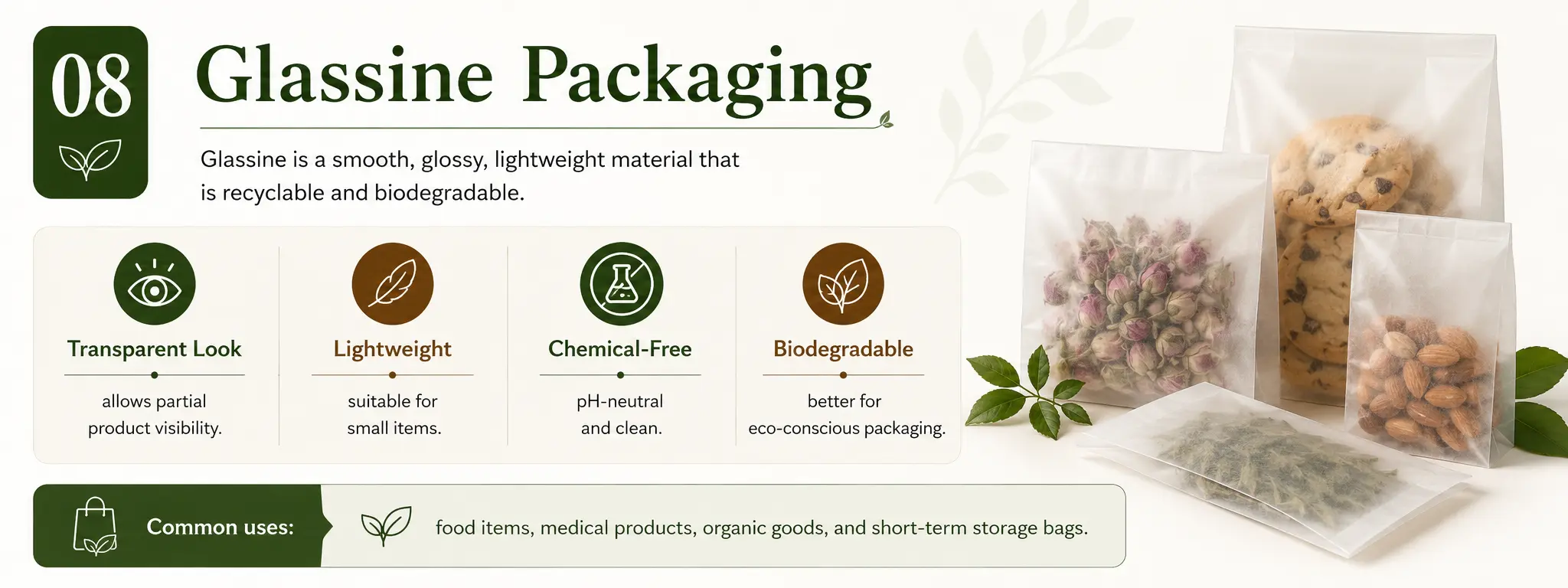
All the brands need packaging according to their product protection needs. Glassine materials are lightweight, transparent, glossy, and recyclable and biodegradable packaging materials to manufacture various types of lightweight food and medical product packaging. These packaging materials are smooth and chemical-free and pH-natural, helping brands to get positive word-of-mouth in the competitive, Eco-conscious market.
Glassine paper bags are used to pack not only food items but also various organic products for the short time storage.
9. Cellulose Packaging: Sustainable Packaging Solutions
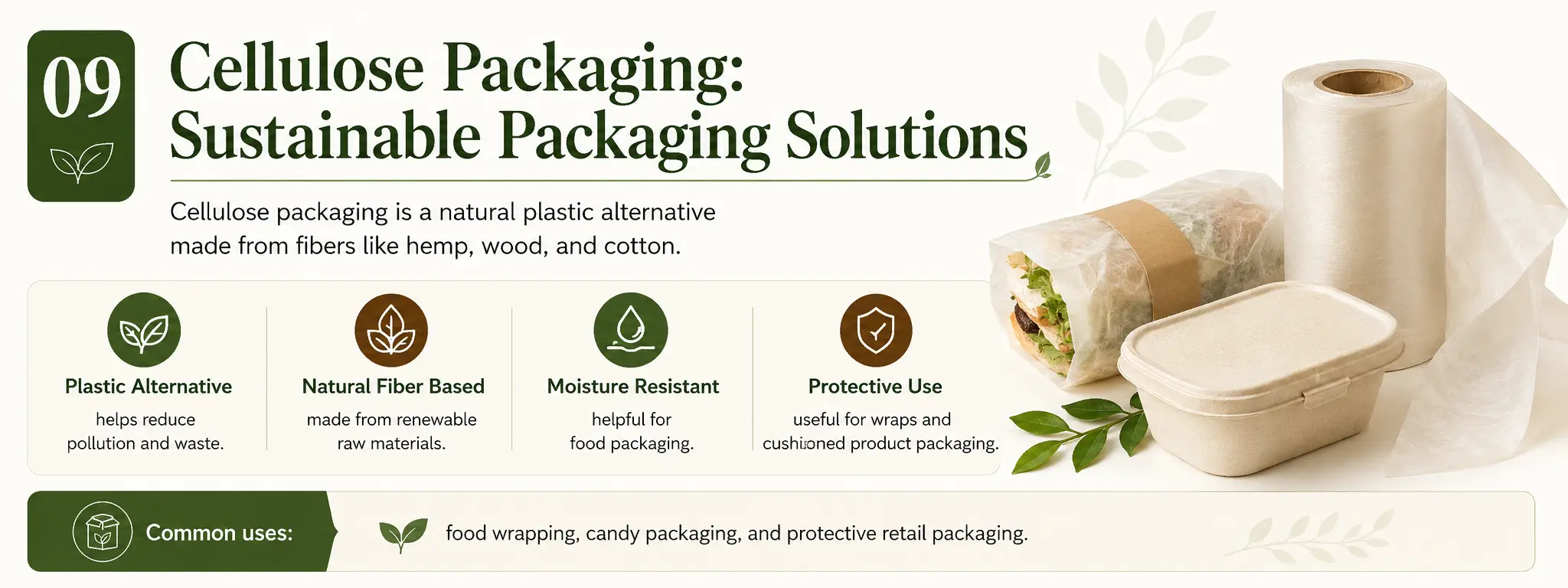
Cellulose packaging materials are the best alternative to plastic and can help brands reduce pollution and waste. They are made of various raw materials, such as hemp cellulose, wood, and cotton. These eco-friendly packaging materials are right for the packaging of food items because they have excellent moisture-resistant properties.
Brands use cellulose packaging materials to manufacture food wrapping, candy packaging, and other robust custom product packaging to provide excellent cushioning.
10. Cornstarch Packaging
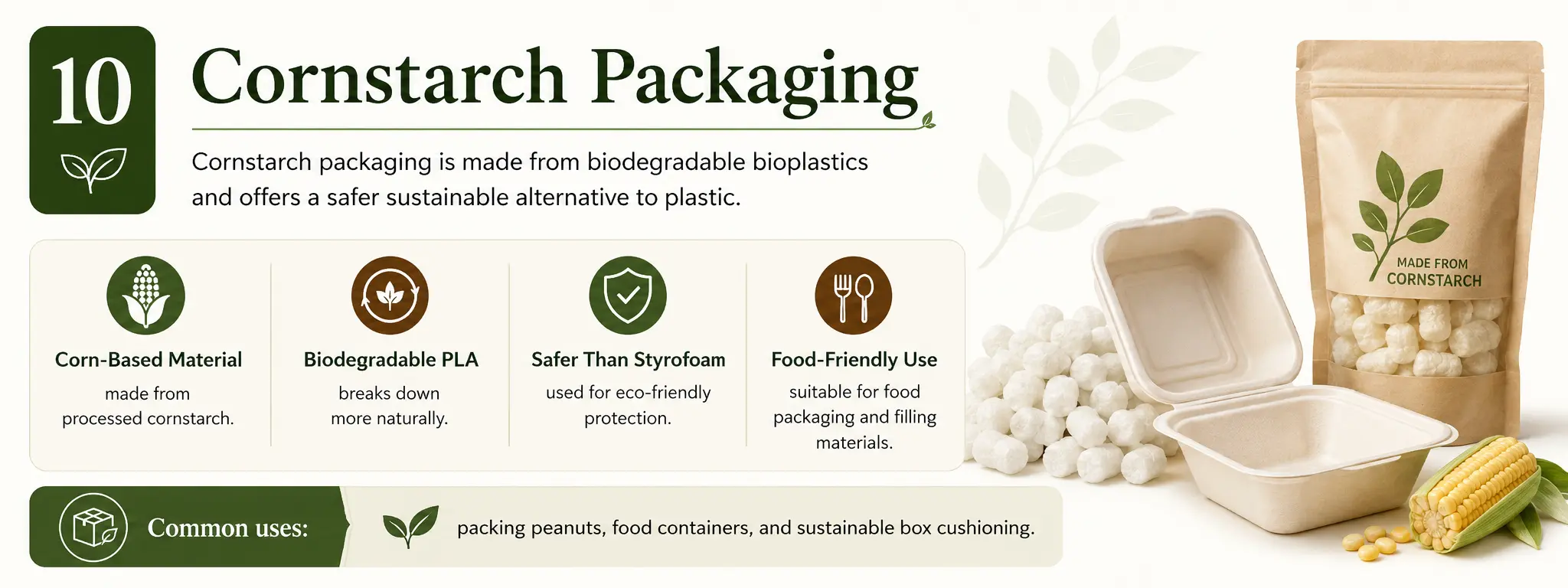
These packaging materials are made of cornstarch and leave no harmful toxic on the surface of our Earth. They are best to create premium, biodegradable, and sustainable packaging peanuts that are safe for your products, like styrofoam, and useful to prevent the chances of waste due to product packaging.
These materials are manufactured after extracting starch from corn and processed into biodegradable bioplastics, which are also known as polylactic acid (PLA). They are an eco-friendly alternative to plastic and safe yet sustainable box materials for the storage of food items.
11. Mushroom Packaging
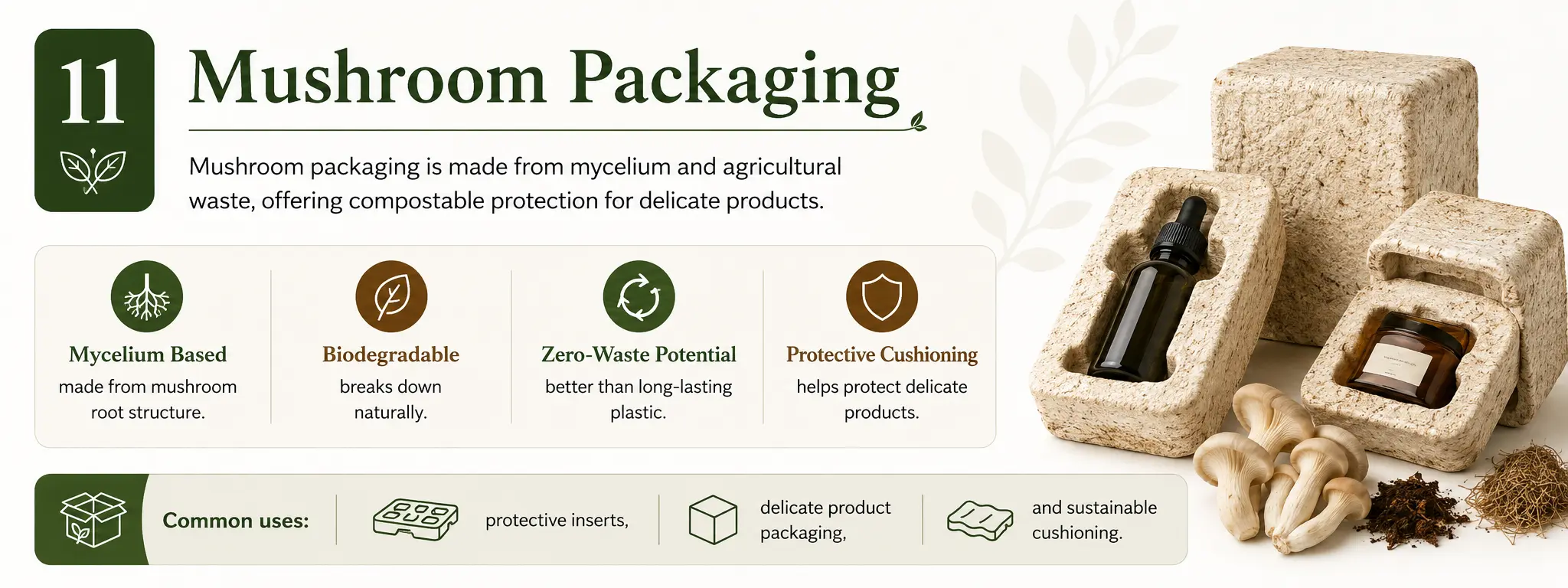
Mushroom packaging materials are one of the safest and eco-friendly packaging options to help brands keep their delicate and organic products safe from damage and contamination. These materials are made of the root structure of mushrooms and other agricultural waste, having excellent durability and a biodegradable nature. They are a sustainable alternative to styrofoam and are easy to biodegrade with the passage of time, keeping Earth safe from harmful impacts due to product packaging.
As compared to plastic packaging, which persists for hundreds of years, causing an increase in waste, mushroom packaging materials are well-suited to produce zero-waste packaging. They can turn into nutrients of the soil and never stay more than a week or a few months on the surface of the Earth.
12. Green Cell Foam: Compostable Materials
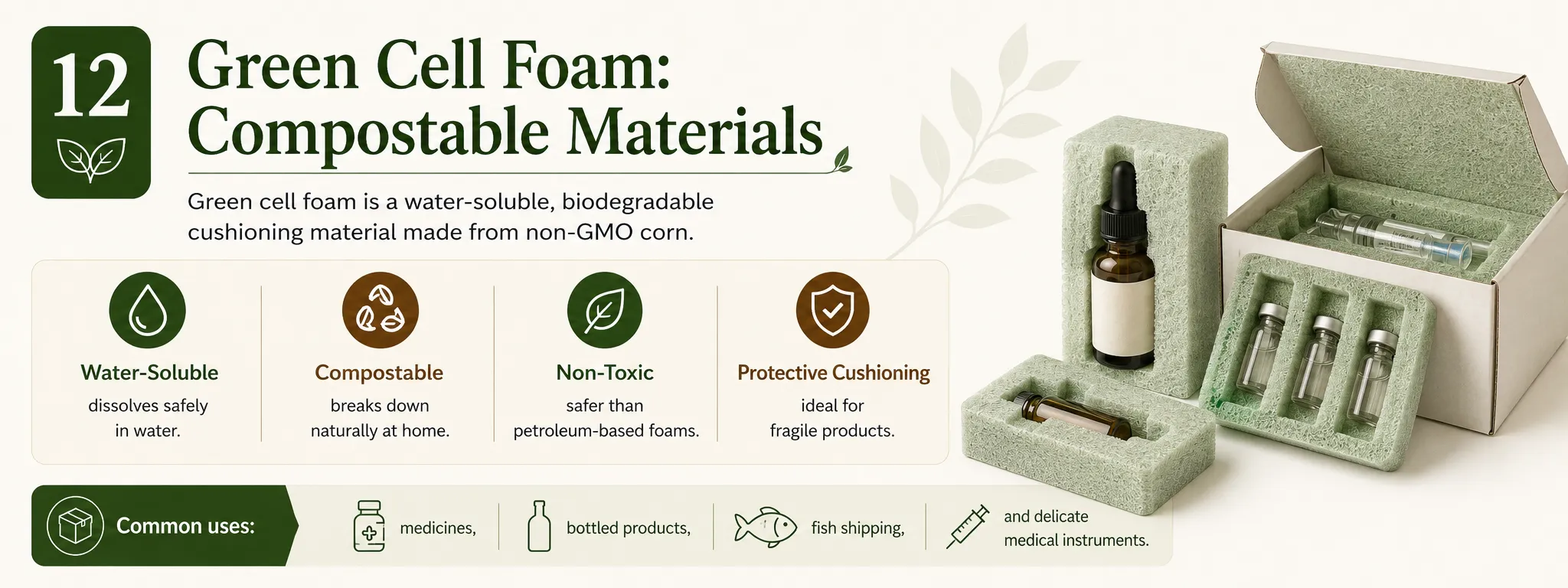
Green cell foam is one of the most eco-friendly types of foam for product packaging. It is a water-soluble, biodegradable, and compostable form that is made of non-GMO corn. It’s only sourced from US-based corn and mixed with water and other natural ingredients to form a dough, which is passed through the heat and pressing process to create green cell foam for the excellent cushioning of delicate and large products.
Their non-toxic, durable, slow-burning, and water-soluble properties make them the right alternative to petroleum-based foams. These are the best compostable materials for sustainable packaging solutions to pack delicate medicines, bottled products, fish, and the shipping of delicate and sensitive medical instruments. Even users can decompose green cell foam at their home and can break it down to drain.
13. Sustainable Plastic Packaging
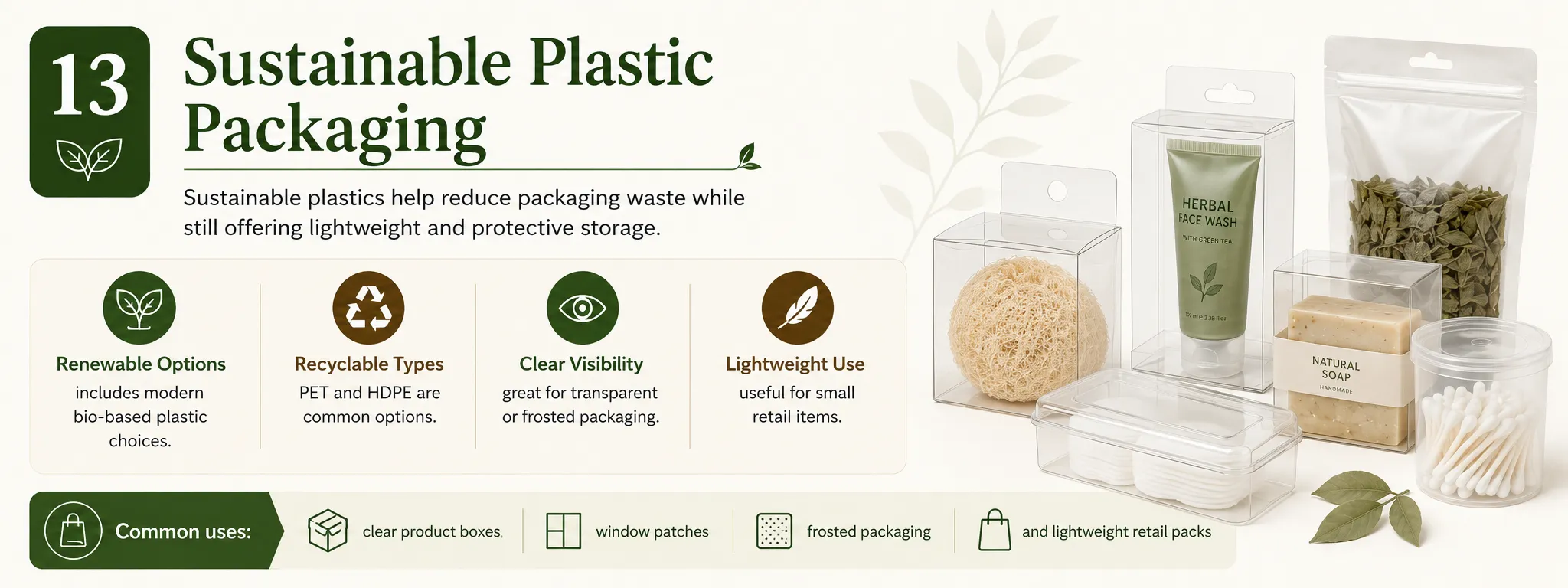
Plastic waste is now a major problem in environmental pollution. Therefore, brands are shifting toward packaging that helps them reduce packaging waste. There are different types of plastic materials that are made of renewable materials like polyhydroxyalkanoate (PHS). These materials are right to help the brand get environmentally friendly packaging for their products.
Apart from BPAT and PBS plastic materials, there are other recyclable and non-renewable plastic materials, such as:
- Ploythylene Terephthalate (PET)
- High-density polyethylene (HDPE)
These materials are used to create transparent recyclable packaging boxes for lightweight items or to add a transparent or frosted window on paper packaging for clear visibility.
14. Glass Packaging
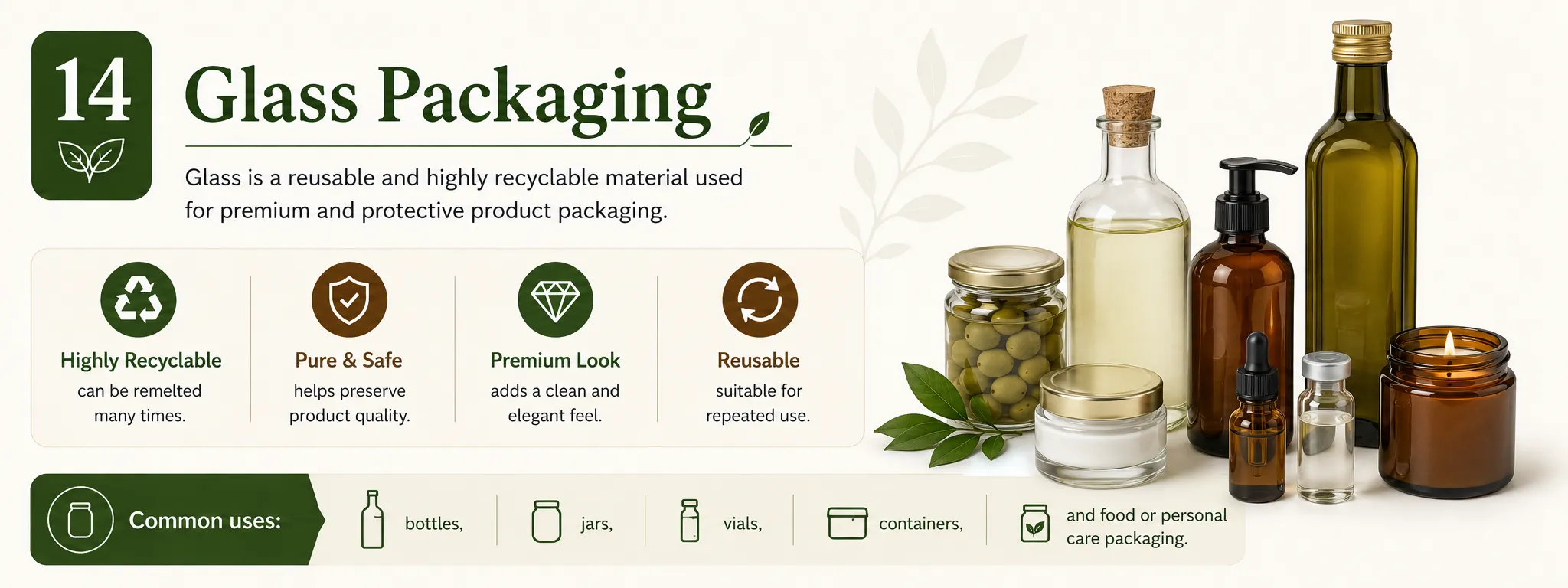
Apart from the lightweight packaging, glass is also the best option for product packaging because of its recyclable nature. It can recycle multiple times without leaving impurities on the Earth. It crushes into small pieces, melts it, and moulds it to form new product packaging, including bottles, jars, containers, tubes, etc.
So, Eco-conscious packaging brands also manufacture glass packaging as a primary packaging for various products, such as jars for candles, bottles for oils, tinctures, medicines, and other personal care products, vials for injections, and glass jars for food items. Glass packaging is one of the best reusable packaging options for the utmost protection of products.
15. Non-Woven Packaging
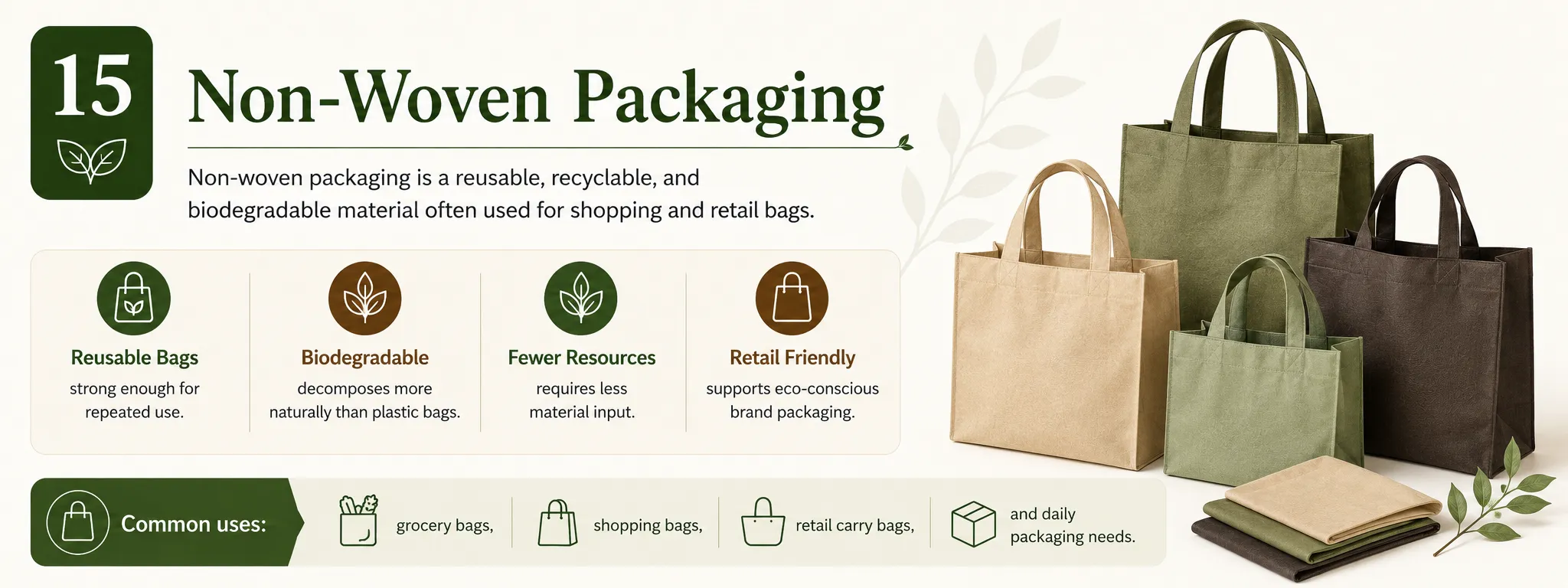
Non-woven packaging materials are recyclable, reusable, and biodegradable materials to manufacture bags for our daily shopping needs. They are made of fiber bonded together by thermal or solvent treatment rather than weaving or knitting. All over the world non non-woven packaging is gaining popularity to pack groceries and other retail items, and best alternative to reduce the use of plastic bags.
Non-woven bags can naturally decompose and do not release any harmful chemicals into the soil. Apart from this, they also need fewer resources than making paper or cotton bags, and are available in various colours. Non-woven material bags are green packaging solutions for brands, helping them to follow the strict regulations of their state to pack their customers’ products in eco-friendly packaging.
Conclusion
According to the research of the Healthy Materials Lab, every year, 2.3 million tons of non-recyclable and non-biodegradable polyester foam end up in landfills. To reduce it to a significant level, eco-friendly materials are compulsory for the product packaging. These materials can meet the various packaging needs of brands, from recyclable paper boxes, bags, sleeves, and wrapping papers to hang tags.
If any brand wants to survive in the highly competitive and Eco-conscious market should select any stock from these top eco-friendly materials to get the benefits of sustainable packaging solutions.
We hope this article helps you to explore the hidden forms of eco-friendly packaging materials to choose the one that suits your product packaging needs the most. If you need further assistance or want to order biodegradable packaging for your products, contact us. We ensure you will appreciate our efforts and services.