Skip to content
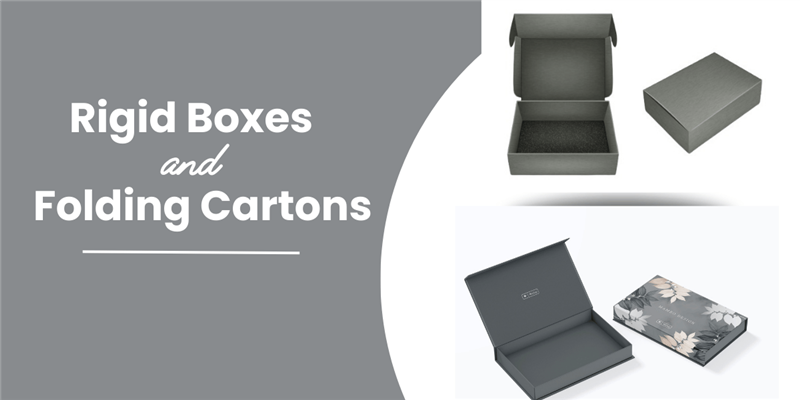
Packaging has its direct influence on how your product is viewed, handled, and remembered by consumers. It does not matter whether you own a small business or you are the employee of a giant brand; the packaging will impact your sales and reputation. There is a variety of packaging, but one of the most common includes rigid boxes and folding cartons. These are used in various industries for various purposes. They all have different looks and feels, costs, and roles.
In this blog, you will learn the clear difference between rigid boxes and folding cartons so you can make better packaging choices.
Understanding the Two Main Packaging Types
All the products require packaging that is suitable for the purpose. Overall, the packaging in the industry is of two broad types: rigid and folding packaging. Rigid boxes are applied to luxury and premium products. The folding cartons are widely used for fast-moving goods and daily goods.
Both of them can be custom-made, printed, and shaped for your brand. Each of them, however, has a different structure, price, and performance. That is why it is important to know the difference, because you can prevent yourself from overspending or getting the wrong one for your product.
What Are Rigid Boxes?
Rigid boxes are sturdy, and they are not foldable. Such boxes are produced with the use of thick paperboard, i.e., chipboard or greyboard. The box is held in shape and solid in feel when held. The most common ones are between 1.5mm to 3mm. These are also called Set up boxes.
Most of the rigid boxes are wrapped using printed or plain paper. That paper can take various finishes, which include soft-touch lamination, foil stamping, spot UV, or embossing. Such finishes make the box look expensive. Custom rigid boxes are found in the luxury market, in a variety of styles and shapes, depending on business requirements.
You often find rigid boxes used in:
- High-end mobile phones (like iPhones)
- Perfume bottles
- Jewelry
- Luxury watches
- Designer clothing accessories
Rigid packaging is popular because it adds value. It also creates a strong unboxing experience for customers. But it is more expensive and takes up more space during shipping and storage.
What Are Folding Cartons?
Folding cartons are lightweight boxes made up of paper. These ones are made out of paperboard, SBS (solid bleached sulfate), or kraft board. They are printed, cut, folded into a flat shape, and glued. One can fold them into shape during the selection of custom packaging for your product.
Storage of the folding carton is easy because of its shipment in a flat form. They occupy less space and are also affordable to produce than rigid boxes. You can print high-quality designs on folding cartons using offset printing.
These cartons are used in:
- Food boxes (like cereal and frozen foods)
- Skincare products
- Toothpaste boxes
- Over-the-counter medicine
Key Differences Between Rigid Boxes and Folding Cartons
Here is a simple breakdown of how these two types of boxes differ:
| Feature | Rigid Boxes | Folding Cartons |
| Structure | Pre-formed and non-collapsible | Foldable and shipped flat |
| Material Thickness | Thick chipboard (1.5mm – 3mm) | Thin paperboard (0.3mm – 0.6mm) |
| Printing and Finishing | Wrap-around paper with premium finishes | Direct printing with standard finishes |
| Storage and Shipping | Requires more space | Easy to store and ship |
| Cost | High | Low to medium |
| Sustainability | Recyclable but uses more material | More eco-friendly with less material |
| Brand Perception | Seen as premium and high-value | Seen as practical and affordable |
Common Applications and Use Cases
Rigid Box Use Cases
- Used in custom luxury boxes for perfumes and skincare
- Ideal for premium tech packaging like smartphones
- Perfect for chocolate or high-end confectionery
- Popular in fancy box packaging for fashion brands
Folding Carton Use Cases
- Standard for printed folding cartons like customized cereal boxes
- Used for medicine packaging in pharmacies
- Common in personal care products like lotions and toothpaste
- Works well in eco-friendly folding cartons for food and wellness products
Which One Should You Choose?
The type of products you have, the cost, the needs for storage, and brand image are the elements that should be considered when choosing between rigid boxes and folding cartons. Rigid boxes are the option if you are packing a premium product such as electronics, perfumes, or luxury accessories.
On the other hand, if your product is lightweight or has a wide distribution and speeds to market with a fast-moving consumer category such as food, personal care, or pharmaceuticals, then folding cartons are more practical. They are cheap, easy to store, and also possible to produce in large quantities with quality printing.
Looking for the right fit? Find out which box design aligns with your brand in our detailed blog guide, Types of Boxes: How to Choose the Right One?
Emerging Trends in Rigid and Folding Packaging
The packaging industry is always evolving. Here are some current trends that affect both types:
- Rigid Boxes Go Green: Recycled chipboard or biodegradable inserts are the materials that are being used by many brands nowadays. This is a way of cutting down on waste while maintaining the premium feel.
- Folding Cartons Get Smarter: New options are window patching, integration of QR codes, and AR features. These lend style as well as function.
- Custom Folding Cartons Grow: More brands are using creative designs in the folding cartons to stand noticed.
- Smart Packaging: Rigid and folding types now have smart features such as track-and-trace, tamper-proof configurations, or data capture features.
Final Thoughts
Rigid boxes and folding cartons are meant to satisfy different needs. Both strengthen and offer luxury to one. The other one leaves you with flexibility and cost benefits. Each one is useful if one specifies your goals, product type, and customer expectations. When you want to create an impression and indicate value, rigid boxes are best. Folding cartons are preferred if you would like to maintain efficiency and be eco-friendly.
Always choose the packaging that supports your brand message. Think about the cost, the feel, and the function. Packaging is more than protection. It shapes how customers see your brand. So, make it count!