Skip to content

Paperboards hold great importance due to their durability, food-grade nature, and printing capability. Paperboard is used in various industries in a wide range of thicknesses (45-700 GSM), from product wrapping to the manufacture of product packaging.
Whether you are a food brand owner, running an apparel store, or any retail brand business, as a packaging expert, I will guide you about paperboard and its various weight conversion charts in this blog.
What is a Paperboard?
Paperboard is a paper-based material that is used in various fields of life, including food wrapping, publications, printing books, and packaging. Paperboards are available in various types, such as kraft, SBS, C1S, C2S, and more. These materials are used to manufacture different types of packaging, including cosmetic boxes, gift boxes, bags, trays, and other product packaging boxes with much-needed durability and thickness.
History of Paperboard
The first paperboard in England was produced in 1818. This paper was very important because it was flat shipped. In the 1800s, after advancements, this paper was used by die-cutting and creasing to make wrapping papers and packaging. In the 20th century, Kraft Strong Paper was introduced, which is very suitable for making much more durable packaging.
Different Paper Weight Measuring Units
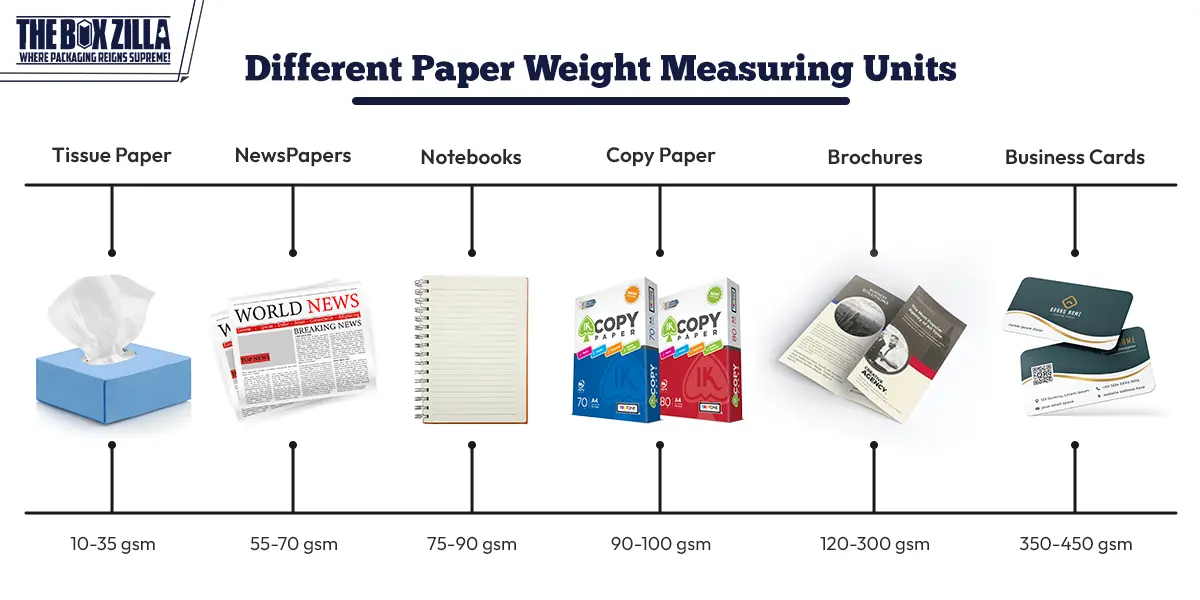
There are different types of units used to measure the weight or thickness of the paperboards to manufacture the desired bags, boxes, and cards for desired applications. Here are some most commonly used units.
- GSM (grams per square meter)
- Inches
- Millimeter mm
- Centimeter cm
- And PT (point = one thousands of an inch).
Different Formulas for Paper Weight Measurement
Here are some more common formulas to measure the thickness of paperboard in various units.
- 1 millimeter (MM) = 2.83465 points (PT)
- Inches into PT formula = (1 inch = 72 points (PT))
Various Paperboards and Their Weight Conversion Charts
In this section, we will guide you about the weight chart of various paperboards that can help you to choose the best one for your products wrapping or product packaging.
Kraft Paper Thickness Chart
| GSM | 45 GSM | 60 GSM | 70 GSM |
| Thickness (MM) | 0.76 – 0.81 mm | 0.80 – 0.85 mm | 0.80 – 1.00 mm |
| Thickness (PT) | 3.00 – 3.14 PT | 2.75 – 3.35 PT | 3.10 – 4.70 PT |
| Thickness (Inches) | 0.02992 – 0.03189 in | 0.03150 – 0.03346 in | 0.03150 – 0.03937 in |
C2S Cardstock Thickness Chart
| Paper Weight (GSM) | 80 | 90 | 100 | 105 | 120 | 128 | 150 | 157 | 180 | 200 | 210 | 230 | 250 | 300 | 350 | 400 |
| Thickness (MM) | 0.06 | 0.07 | 0.08 | 0.09 | 0.10 | 0.12 | 0.13 | 0.14 | 0.16 | 0.18 | 0.22 | 0.23 | 0.25 | 0.32 | 0.36 | 0.43 |
| Thickness (PT) | 2.36 | 2.75 | 3.14 | 3.54 | 3.93 | 4.72 | 5.11 | 5.51 | 6.29 | 7.08 | 8.66 | 9.05 | 9.84 | 12.59 | 14.17 | 16.92 |
| Thickness (Inches) | 0.00236 | 0.00276 | 0.00315 | 0.00354 | 0.00394 | 0.00472 | 0.00512 | 0.00551 | 0.00630 | 0.00709 | 0.00866 | 0.00906 | 0.00984 | 0.01260 | 0.01417 | 0.01693 |
C1S Paperboard Weight Measurement Chart
| Paper Weight (GSM) | 80 GSM | 170 GSM | 190 GSM | 210 GSM | 230 GSM | 250 GSM | 300 GSM | 350 GSM | 400 GSM |
| Thickness (PT) | 3.14 PT | 9.05 PT | 10.23 PT | 11.02 PT | 12.59 PT | 13.77 PT | 16.53 PT | 19.29 mil | 22.04 mil |
| Thickness (MM) | 0.08 mm | 0.23 mm | 0.26 mm | 0.28 mm | 0.32 mm | 0.35 mm | 0.42 mm | 0.49 mm | 0.56 mm |
| Thickness (Inches) | 0.00315 in | 0.00906 in | 0.01024 in | 0.01102 in | 0.01260 in | 0.01378 in | 0.01654 in | 0.01929 in | 0.02205 in |
Wood Free Offset Paper Weight Conversion Chart
| Paper Weight (GSM) | Thickness (MM) | Thickness (MIL) | Thickness (Micron) | Thickness (Inches) |
| 60 GSM | 0.08 MM | 3.14 mil | 80 um | 0.00315 in |
| 70 GSM | 0.09 MM | 3.54 mil | 90 um | 0.00354 in |
| 80 GSM | 0.11 MM | 4.33 mil | 110 um | 0.00433 in |
| 100 GSM | 0.12 MM | 4.72 mil | 120 um | 0.00472 in |
| 120 GSM | 0.15 MM | 5.90 mil | 150 um | 0.00591 in |
| 140 GSM | 0.16 MM | 5.51 mil | 140 um | 0.00630 in |
| 160 GSM | 0.18 MM | 7.08 mil | 180 um | 0.00709 in |
| 180 GSM | 0.22 MM | 8.66 mil | 220 um | 0.00866 in |
| 200 GSM | 0.24 MM | 9.44 mil | 240 um | 0.00945 in |
| 230 GSM | 0.28 MM | 11.02 mil | 280 um | 0.01083 in |
| 250 GSM | 0.29 MM | 11.41 mil | 290 um | 0.01142 in |
| 300 GSM | 0.35 MM | 13.77 mil | 350 um | 0.01378 in |
Factors to Consider While Choosing The Right Thickness of Paperboards
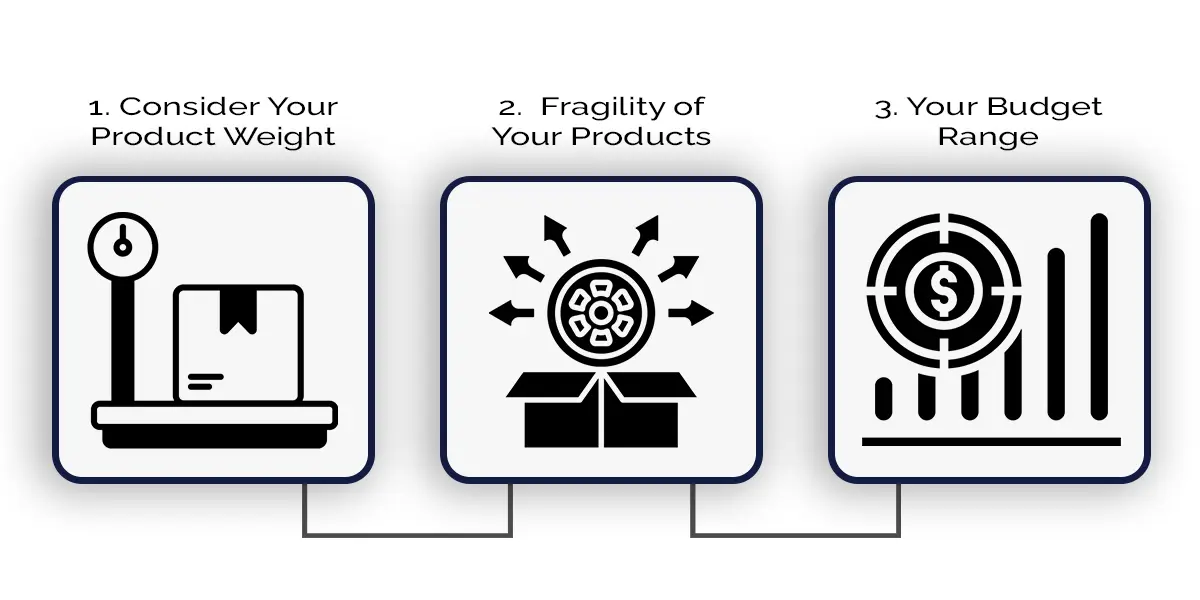
There are several factors to consider when selecting a suitable weight of paperboard. Let’s discuss them step by step.
Consider Your Product Weight
While selecting the paperboard weight or thickness, you should first measure the weight of your products. For lightweight items, you can choose a lower-weight paper stock, and for heavy and bulky products, opt for a thicker paperboard to manufacture custom product packaging.
Fragility of Your Products
All retail products have varying protection needs; therefore, you should select the paperboard thickness that meets the specific protection requirements of your products. Such as glass-made products require thicker and more durable paperboard for customized boxes.
Your Budget Range
All the materials have various prices in the market because of their printing capabilities, durability, and thickness. Therefore, you should carefully select the materials that help you to create cost effective packaging for your products.
Some Regional Thickness Standards: You Should Know
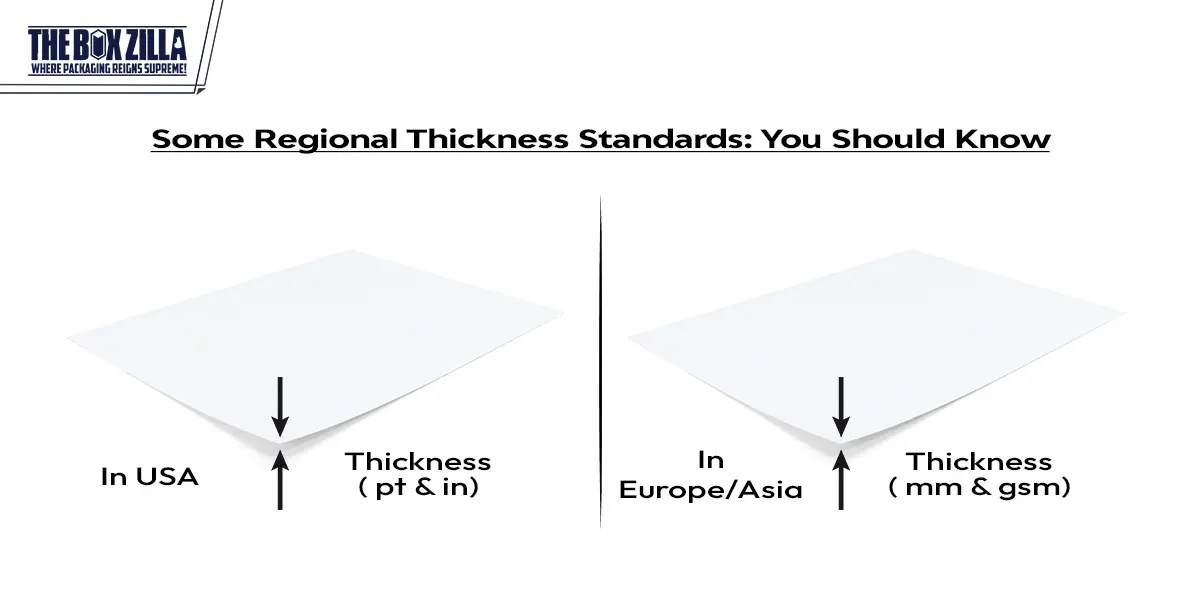
There are different types of paper weight measurement units used all over the world and in various countries, such as:
- USA: Points (pt) and inches
- Europe/Asia: Millimeters (mm) and GSM
Conclusion
The paperboard thickness or weight conversion chart is more than just a number, helping brands to choose the desired packaging for their products. The thickness of paperboard affects the look, durability, and printing capability of the packaging. If you need any assistance or if you want to purchase paper packaging for your desired products, contact us.