Skip to content

The recent survey by GreyPhyte has revealed that 81% of consumers have tried a completely new product just because they got inspired by its packaging. In today’s crowded marketplace, the box of your product acts as your primary and silent brand ambassador. When screens and shelves are fighting for limited attention, your design choice can decide whether your product gets added to the cart or ignored.
The global food packaging market is expanding rapidly. This massive growth has led to intense competition. As a food brand, you can only survive this by moving towards custom design ideas from the generic templates to connect more with your customers. This guide will breakdown the design trends, actionable tips, and strategic benefits for food businesses who want to elevate their product presentation.
Top Food Packaging Design Trends Driving the Industry
Modern packaging utilizes a balanced approach between visual appearance and functional performance. If you want to design your food packaging, you must consider both aspects to captivate today’s consumers.
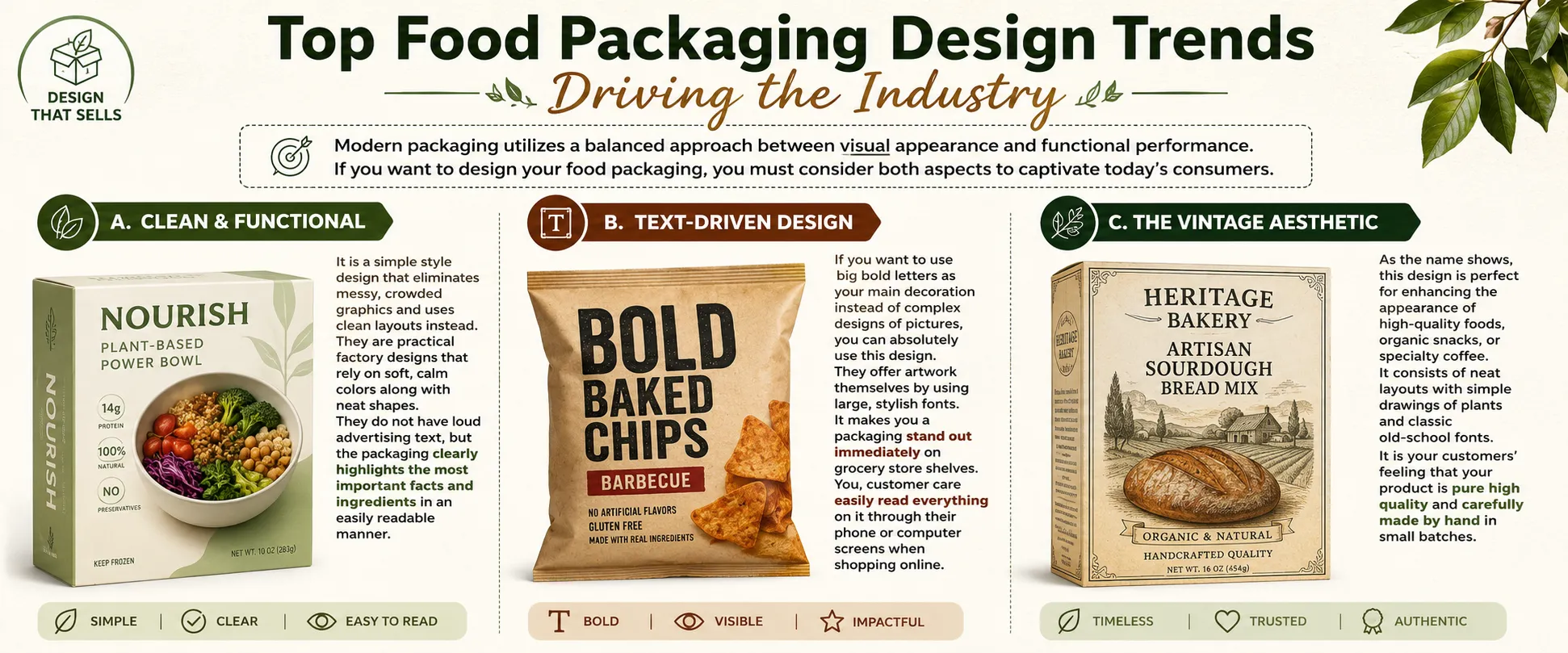
A. Clean & Functional
It is a simple style design that eliminates messy, crowded graphics and uses clean layouts instead. They are practical factory designs that rely on soft, calm colors along with neat shapes. They do not have loud advertising text, but the packaging clearly highlights the most important facts and ingredients in an easily readable manner.
B. Text-Driven Design
If you want to use big bold letters as your main decoration instead of complex designs of pictures, you can absolutely use this design. They offer artwork themselves by using large, stylish fonts. It makes you a packaging stand out immediately on grocery store shelves. You, customer care easily read everything on it through their phone or computer screens when shopping online.
C. The Vintage Aesthetic
As the name shows, this design is perfect for enhancing the appearance of high-quality foods, organic snacks, or specialty coffee. It consists of neat layouts with simple drawings of plants and classic old-school fonts. It is your customers’ feeling that your product is pure high quality and carefully made by hand in small batches.
Crucial Food Packaging Design Tips for Maximum Shelf Impact
In order to make your customized food packaging more unique, you have to deeply focus on every perspective of the box, ranging from visual identity to structural integrity. You must keep the essential tips like visual principles, production limits, and consumer habits in mind during the design process.
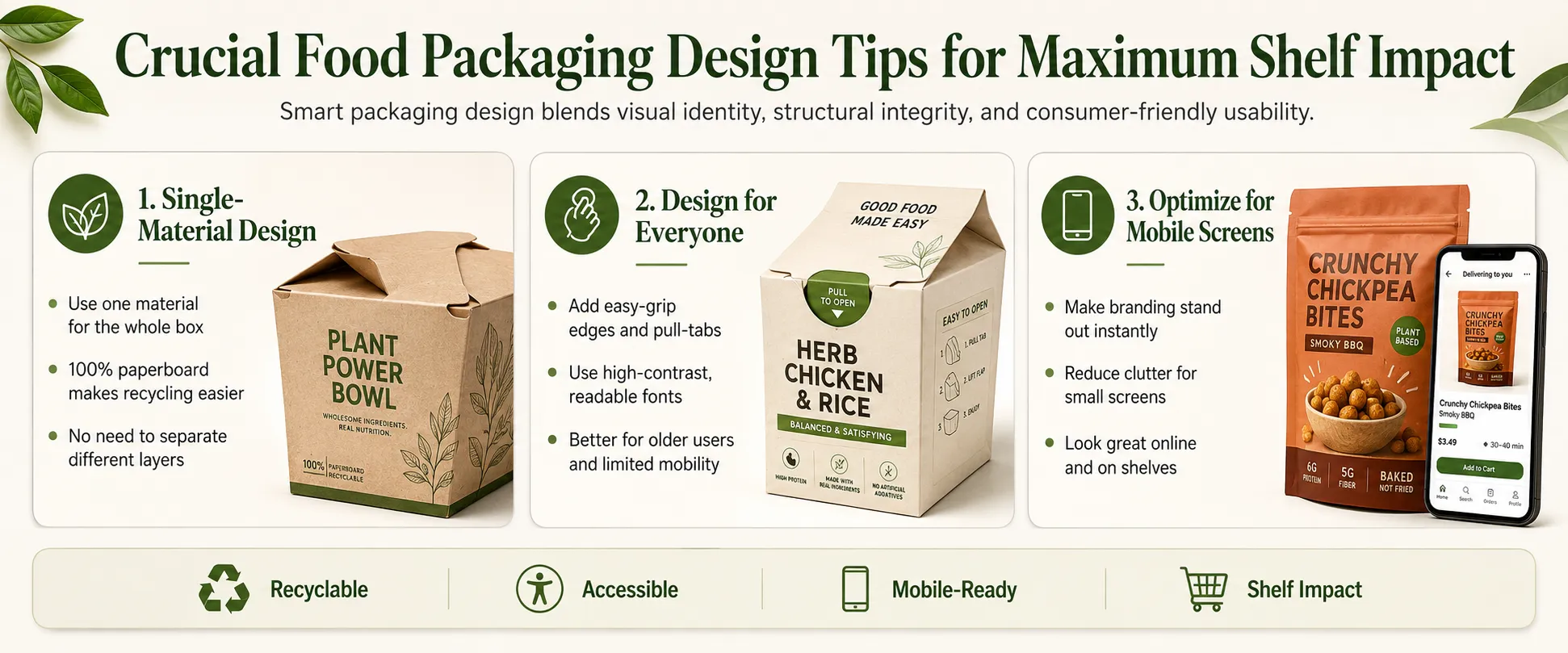
Single-Material Design:
You should aim for mono-material designs, using a single material to make a complete box. For instance, you can use 100% paper board for your packaging. This technique makes it easier for consumers to recycle the box without tearing apart different layers.
Design for Everyone:
You should design your customize layouts with ergonomics in your mind. You can accommodate older consumers or individuals with limited mobility by using easy-to-grip edges, pull-tabs, along with high contrast and easily readable font.
Optimize for Mobile Screens:
The design of your food box must look equally engaging on social media or delivery app thumbnail as it does on a real Supermarket shelf. You should minimize the clutter in order to make your brand name stand out instantly on screen.
The Power of Sustainability in Food Packaging
Eco-friendly practices are a need of the hour and are fundamental operational requirements. It is being observed that the eco-friendly food packaging market is growing at an annual rate of 10%, depicting a major shift towards green alternatives. Brands are shifting away from traditional single-use plastics to embrace innovative circular choices:
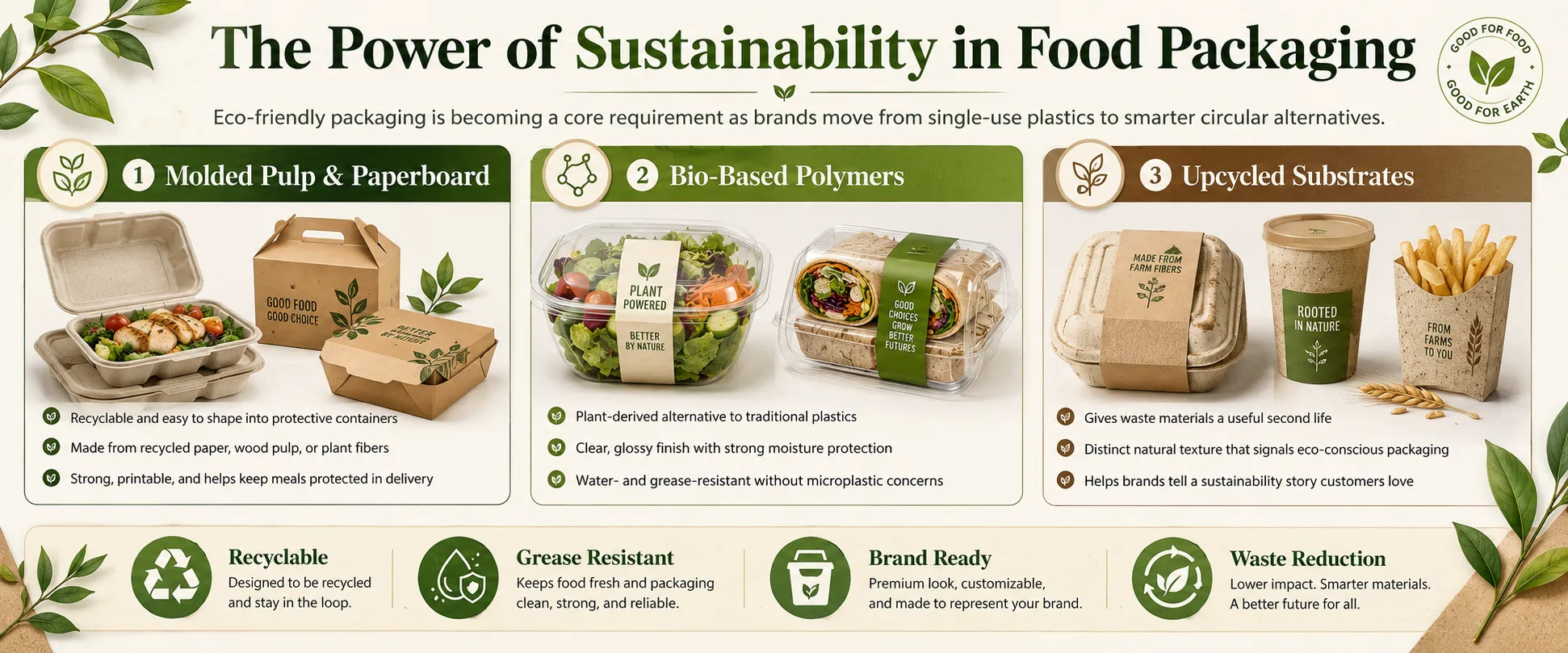
Molded Pulp and Paperboard:
These are highly recyclable materials and are easy to shape into structured, protective containers. They are made from recycled paper, wood pulp, or natural plant fibers. Molded pulp offers excellent insulation to keep hot food warm during delivery.
For your restaurant or bakery boxes, paperboard boxes provide a smooth and sturdy surface that is incredibly easy to print on. This means you can display your eye-catching custom logos and vibrant designs without losing any of the structural stability needed to prevent leaks or crushed meals.
Bio-Based Polymers:
These are plant-derived alternatives that offer excellent moisture barrier protection while breaking down cleanly without leaving microplastics. They provide a clear, glossy finish that makes your salads, wraps, and colorful dishes look highly appealing. Most importantly, they are completely water- and grease-resistant, giving you peace of mind that your sauces won’t soak through the box on the way to the customer.
Upcycled Substrates:
This type of packaging is made from agricultural food byproducts, giving waste a second life. Using upcycled substrates gives your packaging a highly unique, textured feel that immediately screams “earth-friendly” to your customers. It tells a powerful story that modern diners love to share on social media: that your business actively reduces global waste before the food even reaches their plates.
Conclusion:
You can design effective food packaging that requires a balanced approach of aesthetic identity, user convenience, and environmental responsibility. You can transform your simple box into a powerful marketing tool by using clean layouts, green material innovations, and honest transparency. A smart, carefully crafted package does more than just protect the delicious food inside; it tells your brand’s unique story from the very first glance.
FAQs
1. What is the most cost-effective way to make food packaging look premium?
The best budget-friendly method is strategic minimalist typography. This approach utilizes a bold and elegant font on a simple and clean backdrop for branding instead of expensive all-over printing.
2. How do I ensure my food packaging design complies with legal regulations?
You can ensure your food packaging design complies with legal regulations by dedicating a clean space on your box for the Nutrition Facts panel, ingredient lists, allergen warnings, and net weight. These must meet strict font size and placement guidelines set by food safety authorities (like the FDA).
3. How does packaging design directly influence consumer buying behavior?
Packaging design directly influences the consumer’s buying behavior by triggering psychological activity. The consumers subconsciously link design features to organic and premium products, while vibrant colors can signal “bold flavor.”