Skip to content

The frozen food section is undergoing a huge transformation, as people are more focused on convenient meals with restaurant-style home dining. This increase in market value and consumption has ultimately led to more competition. It has become necessary for the food manufacturers and emerging brands to choose packaging that can appeal to the customers as well as withstand the condensation process. You need a deep understanding of modern frozen food packaging design. In this comprehensive guide, you can learn about how the frozen food industry is adopting structural innovations, emerging market trends, and practical design strategies.
What are Custom Frozen Food Boxes
You can understand the value of specialized packaging by exploring what makes it different from standard box design. An intro to customized frozen packaging is marked by the feature of sub-zero durability, which means it can maintain its structural, functional, and protective qualities in extreme cold temperatures below the freezing point. The point where generic packaging gets softened, or even collapses, these boxes offer structural durability.
They are manufactured using long-fiber paperboards that are treated with food-safe moisture barriers. They are designed perfectly to remain rigid or flat and perfectly spotless from the factory floor to the consumer’s home freezer. You can eliminate unnecessary dead space by customizing the box dimensions according to the product, which can also reduce the waste material.
Use of Material in Customized Frozen Boxes
You need to choose the appropriate material that can ensure the perfect engineering of high-performance boxes. The top brands are using some industry standards that maintain structural integrity. They are primarily focused on offering a smooth and full canvas for high-quality printing, which can never be affected by freeze cycles.
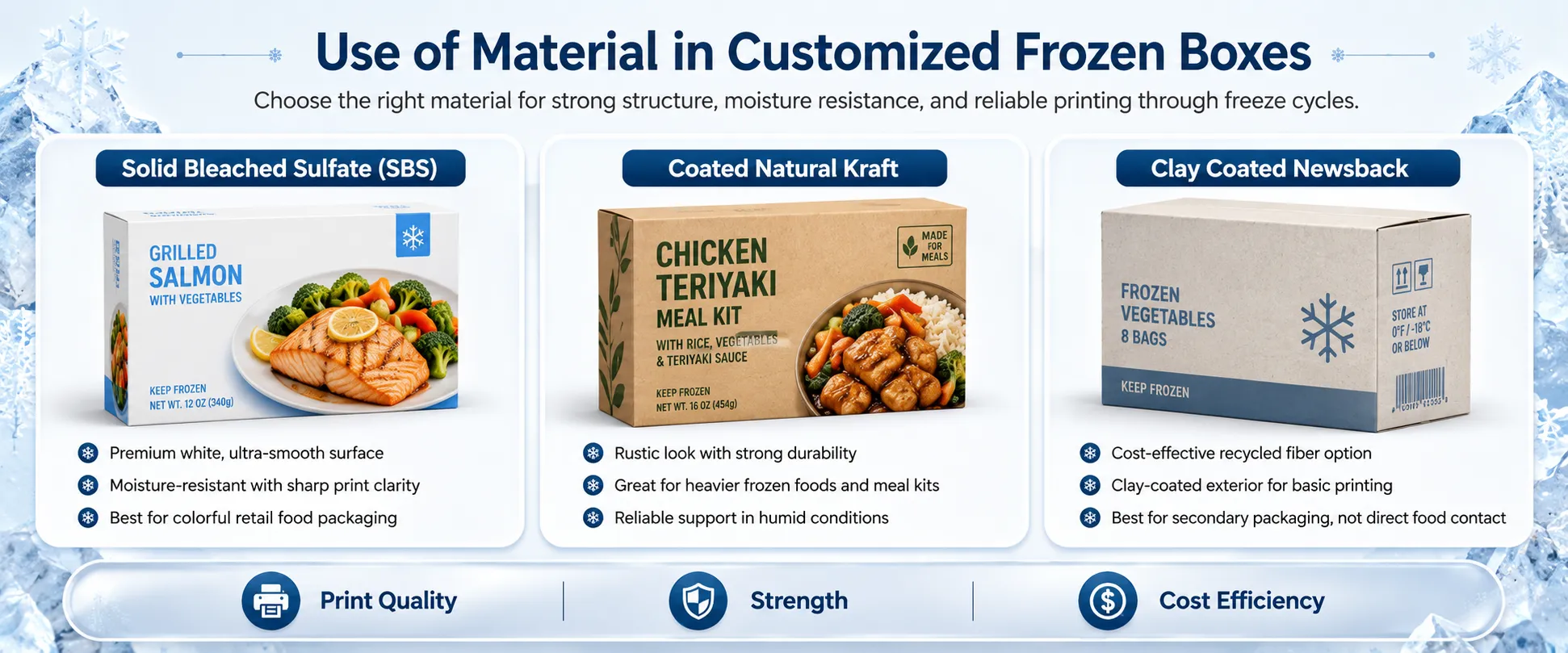
Solid Bleached Sulfate
It is one of the most premium packaging materials for retail food presentation. It is made up of wood pulp and has a brilliant white, ultra-smooth surface. It is moisture-resistant and provides print clarity for complex designs. This material is highly appropriate for food relates images with colorful graphics. It is used most often by brands, giving them a competitive edge for vibrant printing with an appetizing theme.
Coated Natural Kraft
If your brand is eco-conscious and you are looking for a rustic box with physical strength, you can certainly use the coated natural kraft. It is made from unbleached wood fibers with superior toughness. You can use this material to pack heavier food items like bulk meats or family-sized dinner kits. The food boxes made from kraft offer a reliable structural support for humid environments.
Clay Coated Newsback
As a food business owner, if you are looking for secondary packaging that does not have direct contact with food, you can use these clay coats. It is highly affordable, using recycled fibers with a thin clay coating on the exterior for basic printing. Although it does not match the pure tensile strength of SBS or Kraft, but an excellent, eco-friendly choice with low prices.
Top Reasons to Invest in Custom Frozen Food Boxes
You would have been searching for an answer to “why” for switching towards customized frozen packaging. These boxes will provide you with clear and measurable business advantages. Consider these below things if you are evaluating the current operational budget:
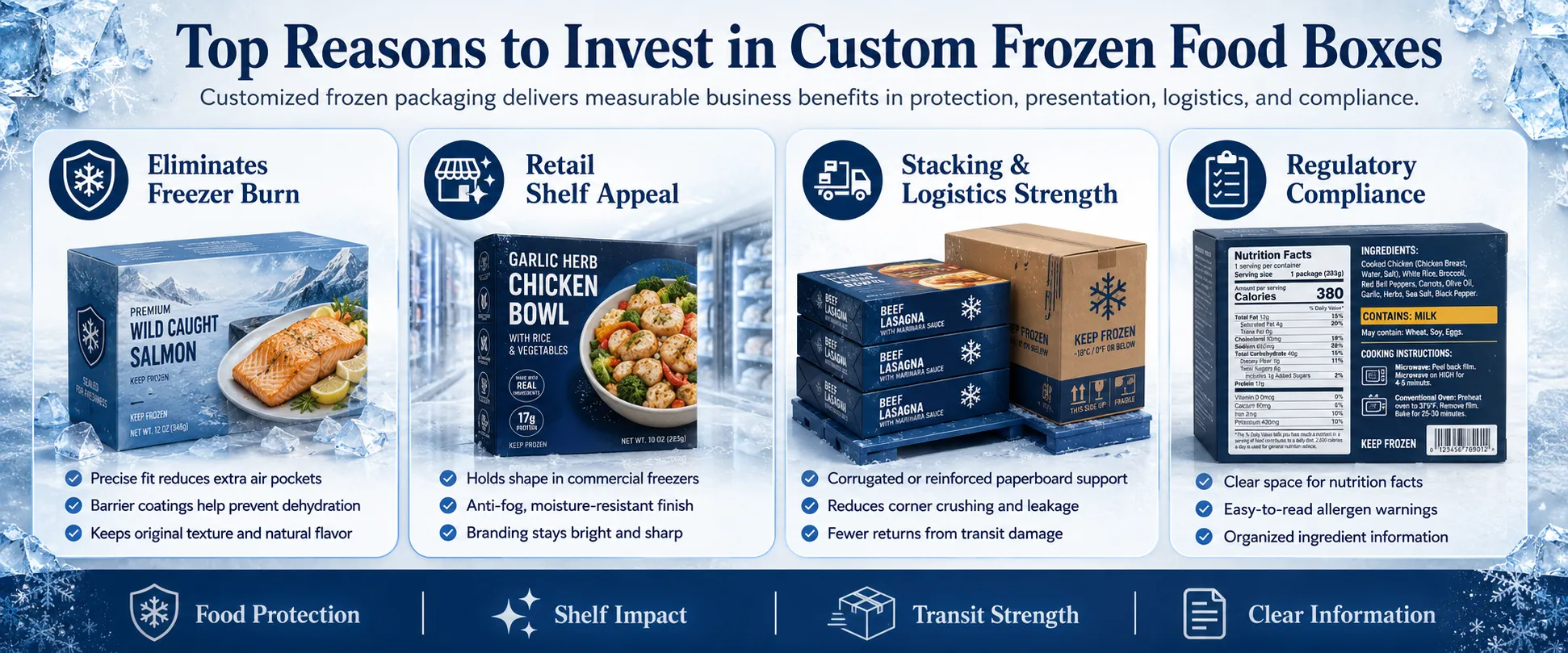
Total Elimination of Freezer Burn:
The customized boxes can offer precise fitting, reducing excess interior air pockets. They protect your food due to proper barrier coatings, preventing dehydration of your food from dry freezer air. It can serve food to your customers with original textures and natural flavors.
Unmatched Retail Shelf Appeal:
Unlike generic boxes, the custom food boxes do not easily deform in commercial freezers. They have specialized, anti-fog and moisture-resistant finishes that can keep your branding bright, sharp, and highly attractive to passing shoppers.
Seamless Logistics and Stacking Strength:
The use of custom corrugated boxes or reinforced paperboard boxes can endure specific vertical weight loads. It reduces the crushing of corners, product leakage, and minimal store returns due to transit damage.
Built-In Regulatory Compliance:
You can get an ample, appropriate, and organized space to print the required nutritional information, allergen warnings, and sources of ingredients. The customer can clearly read everything on the box, meeting all the compliance standards.
Frozen Food Packaging Trends You Need to Know
In this fast-paced world, the packaging market is also moving fast. It has been influenced by modern green initiatives and tech-savvy campaigns. You should be fully aware of these frozen food trends to keep your brand ahead of the competition.
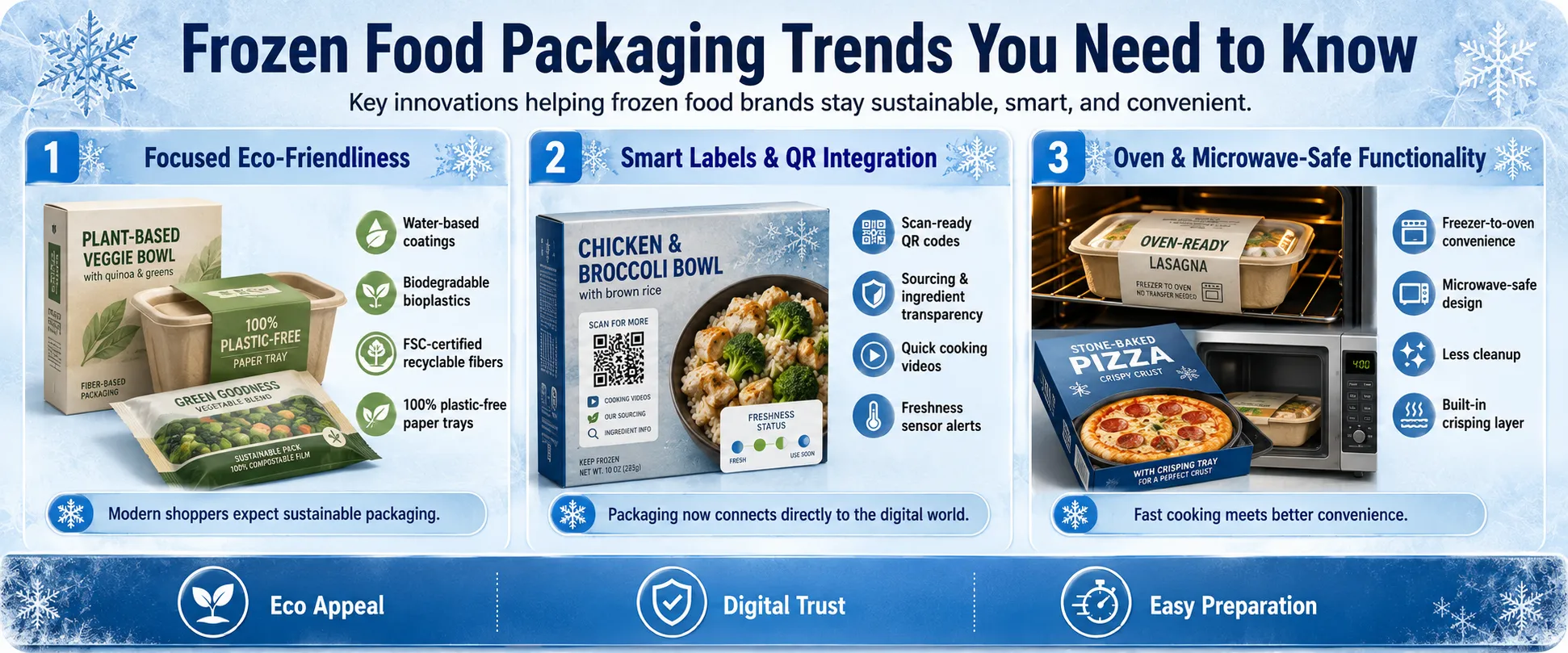
Focused Eco-Friendliness
Sustainability has no longer remained a bookish concept; it has become a core expectation for modern shoppers. It has forced brands to move away from the traditional plastic linings and replace them with water-based coatings, biodegradable bioplastics, and FSC-certified recyclable fibers. Using easily recyclable packaging shows consumers that your brand cares about its environmental footprint. In today’s era, innovations are marked by 100% plastic-free, barrier-coated paper trays that can go directly into recycling bins.
Smart Labels and Interactive QR Integration
Your brand can directly connect to the digital world by incorporating clean, scan-ready QR codes into box designs. You can share sourcing stories, quick cooking videos, and ingredient transparency with your customers, without any mess on product boxes. Furthermore, freshness sensors are emerging on high-end frozen seafood boxes, shifting color if the cold chain has been broken during transit.
Oven and Microwave-Safe Functionality
People love using air fryers and microwaves because they are fast and easy. Now, new packaging lets you take food straight from the freezer and put it right into the microwave or oven. This saves time and makes fewer of the dishes dirty. This packaging has a special built-in layer that helps foods like pizzas and hot pockets get crispy and delicious, just like they were cooked in a regular oven.
Frequently Asked Questions
What is the best packaging material for frozen foods?
The best packaging material for frozen food includes the clay-coated newsback, solid bleached sulfate, and coated natural kraft. They are best for frozen conditions as they resist temperatures as low as -40°C, preventing structural collapse during transit and storage.
How do you protect custom food boxes from condensation and moisture?
The customized boxes for humid conditions use advanced food-safe internal barrier coatings like water-based aqueous coatings. These barriers act as a shield, preventing liquid condensation from soaking into the raw paper fibers.
Are eco-friendly and biodegradable frozen food boxes completely moisture-resistant?
Yes, these eco-friendly boxes utilize plant-based bioplastics and water-based bio-resins that are applied directly to FSC-certified recycled fibers. They provide resistance to water, grease, or oil while remaining fully compostable or recyclable.
Why do standard cardboard boxes collapse in commercial grocery freezers?
The standard cardboard boxes collapse due to untreated cellulose fibers that can naturally absorb humidity. The high moisture levels in commercial freezers can weaken these fibers, which can cause the box to soften and eventually fail to support the stacking capacity.
Can custom frozen food boxes be recycled in standard curbside bins?
Yes, customized frozen packaging can be recycled in standard curbside bins if they use modern water-based coatings. The modern, eco-friendly paperboard options are widely accepted in standard recycling streams.
How do moisture coatings prevent a box from collapsing in the freezer?
Moisture coatings form a microscopic shield over the paperboard fibers. This barrier blocks condensation from soaking into the raw pulp, ensuring the box retains its full structural stiffness even during long-term freezer storage.
What printing method works best for frozen food packaging design?
Digital printing is perfect for smaller and seasonal items due to its low setup costs and rapid turnaround times. For large, high-volume production runs, flexographic or offset printing offers the lowest per-unit costs and unmatched color accuracy.