Skip to content

Preserving food items longer is vital for the brand to meet the emergency food and recreational products needs. In this case, the most effective packaging solutions are mylar bags. These food-grade and moisture-proof bags provide superior protection to products from moisture, air, light, and other contaminants, preventing food spoilage. To make them more safe for products, their sealing should be more secure and child-resistant.
There are different tradition sealing methods used to seal mylar bags, including heat-seal and vacuum seal. In this article, we will guide you on how to vacuum seal mylar bags the right way with the help of tools that will last for years.
Whether you offer food items, cannabis products, CBD extracts, medicines, and other retail items, learning about how to vacuum seal 5-gallon mylar bags can help you ensure the utmost protection of your products for the expected time.
Why Mylar Bags?
Before going on to understand the sealing process, let’s learn about the needs of mylar bags for food storage. Mylar bags are a safer storage option than common pouches that are made with polyester film. These bags have low gas permeability, high tensile strength, and are suitable for the protection of food items from light, moisture, germs, and other harmful factors.
Various food brands, electronics, pharmaceutical, cannabis, and cosmetic brands use these puncture-resistant and food-grade mylar packaging bags to extend the shelf life of their products. Learning about how to vacuum seal a mylar bag can help you to get the given benefits for your business and products. With proper sealing, you can keep your product in actual condition for 5-25 years.
Challenges You Can Face with Standard Vacuum Sealers
There are different types of vacuum sealing methods for product packaging bags. People think that any vacuum sealer can work well for mylar. But the reality is adverse. Clam-style models like the FoodSaver are best to extract and grip the inside air from the robust, thicker, and smooth polyester film or mylar material.
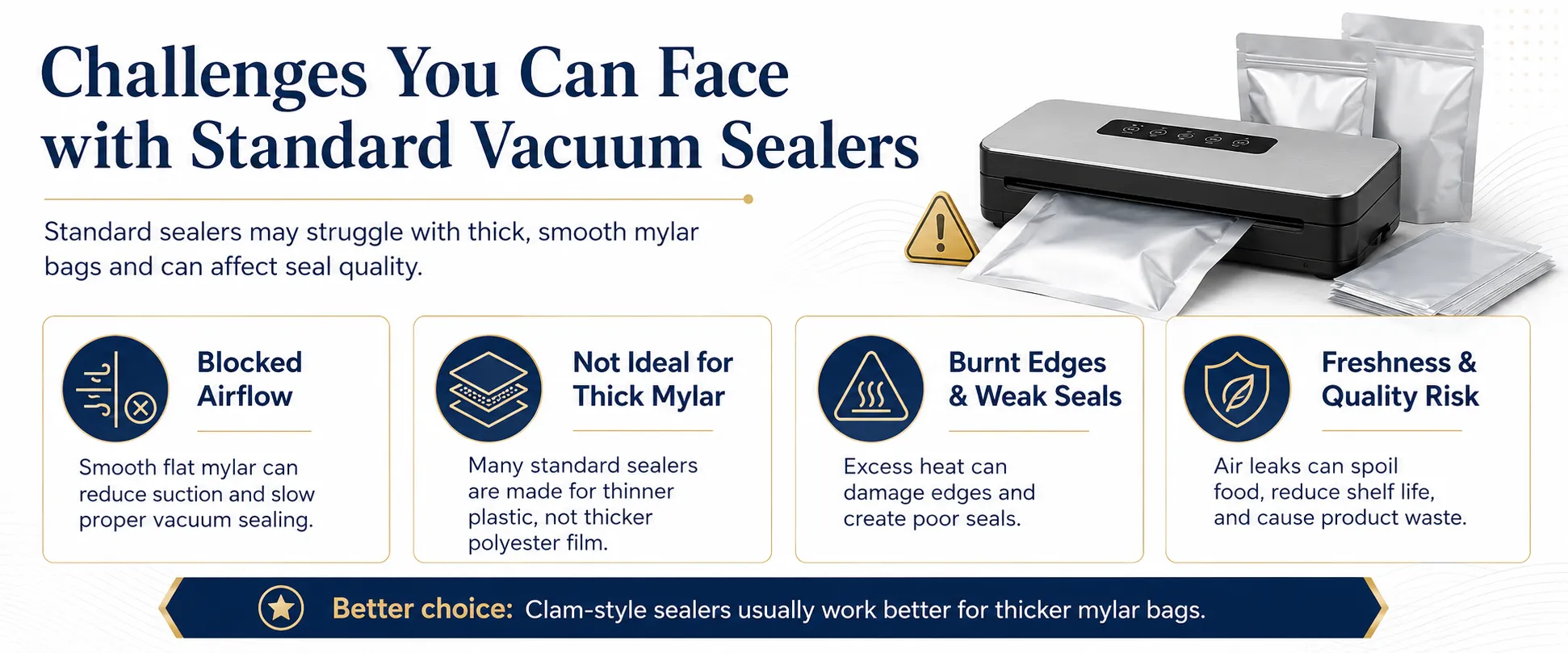
Flat surface of mylar can block airflow and make it difficulty for suction to occur as compared to the textured vacuum mylar bags. Some standard sealers are made to seal a thin layer of polyester film. They do not consider effective for thick mylar sheets and can cause the burning of edges, poor seals, and loss of product quality.
When you are looking for the answer to how to vacuum seal mylar bags using a FoodSaver, you should learn about the most effective and right methods to prevent the spoil and waste of your food items.
Nested & Snorkel Methods for Proper Sealing
There are two main mylar bag sealing methods, whether your bags are small or large. These two methods are highly important.
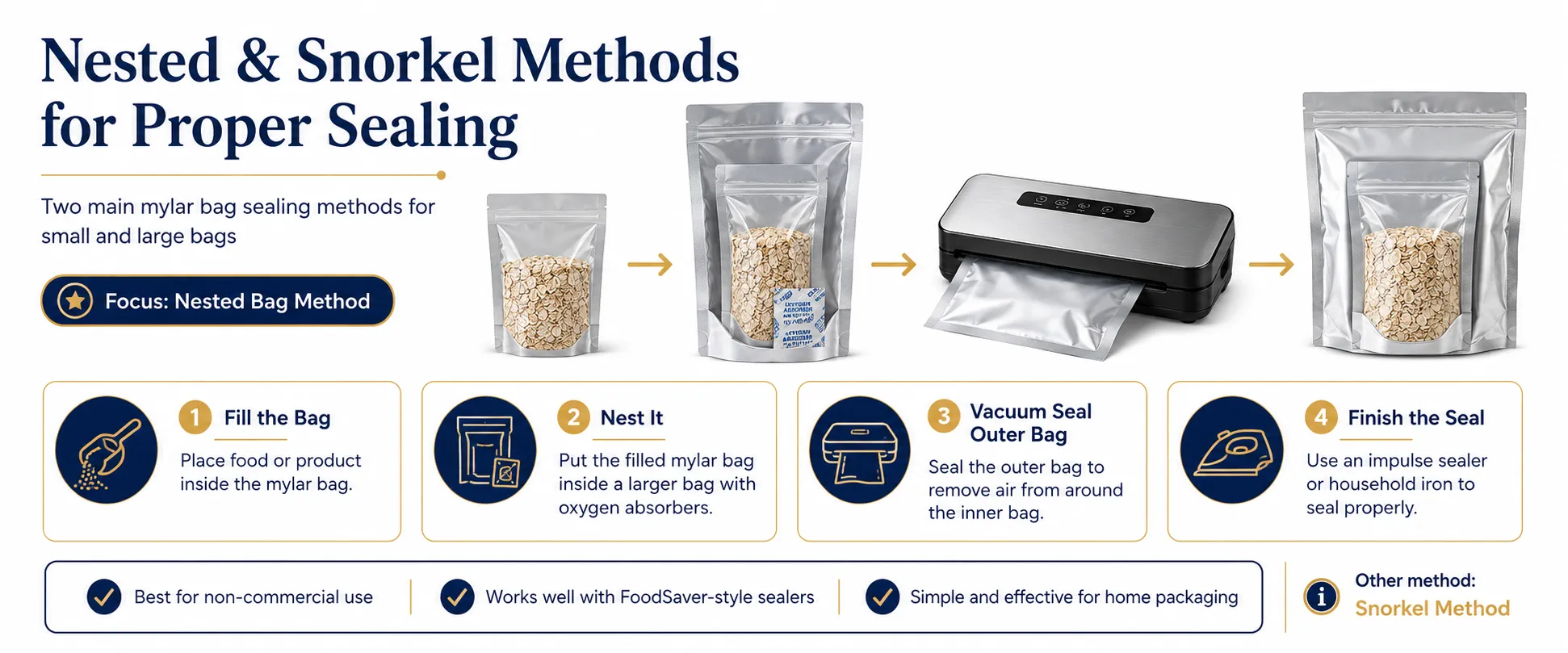
Nested Bag Method
This is a popular technique for non-commercial usage of a product like a FoodSaver. Here is the step-by-step guide on how it works. First, you need to place your product, like food items, in your bags. After that, place the filled mylar bag inside the other large-sized bags with oxygen absorbents. Plus, vacuum-seal the outer bags, which will also remove some air from the inside mylar bag too.
For this method, you can use an impulse sealer or a household iron to provide an effective vacuum seal to your products.
Snorkel Vacuum Sealers for Mylar Bags
If you want to seal large mylar bags, like 5 5-gallon mylar bag, the snorkel method is one of the right options. In this method, the vacuum seal machine has a vacuum nozzle that is known as a snorkel, which is inserted directly into the bags or pouches.
Let’s learn the guide in detail.
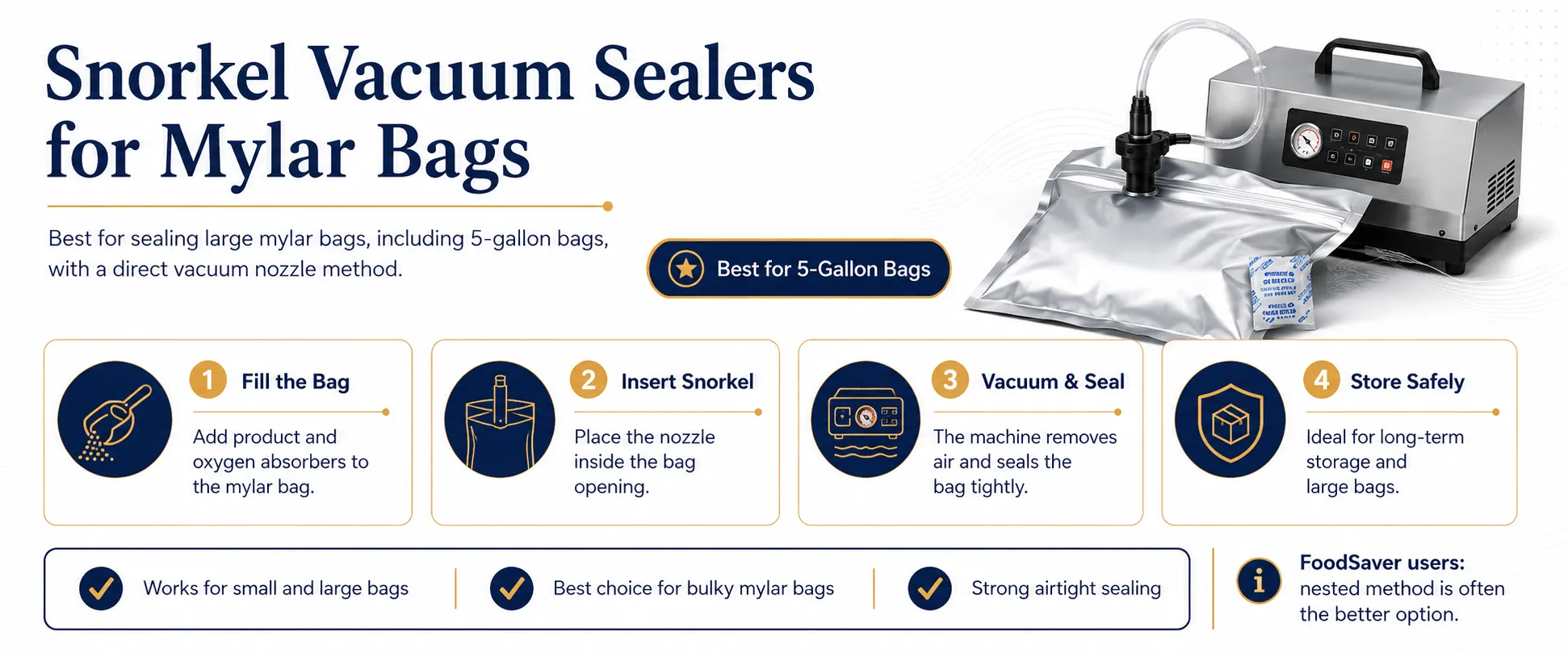
Pack your products and oxygen absorbers in your 5-gallon mylar bags and insert the snorkel inside the bag from the opening side. In this way, the vacuum seal machine will suck all the air and seal the bags properly for the safe storage of products.
This method is the best for all sizes of mylar pouches and bags. If you are looking for the answer to how to vacuum seal 5-gallon mylar bags the right way, the snorkel method is the answer. For FoodSaver users who want to learn about how to vacuum seal mylar bags using a FoodSaver, the nested method is one of the best options.
Mylar Compatible Bags and Machines
If you want the proper seal of your mylar bags with the help of vacuum sealers, you should always choose at least 5 Mils thick mylar sheet because thinner polyethylene mylar bags can not provide a safe storage and can tear during sealing.
Do you want to know how to vacuum seal a mylar bag at home? If so, you should first use flat mylar bags, and for their sealing, impulse sealers or high-heat sealers are the best option. They are more effective for the storage of food items for longer as compared to zipper mylar bags and pouches.
Different Types of Vacuum Sealers
- Impulse Sealers: These sealers use controlled bursts of heat and are perfect for sealing Mylar bags.
- Chamber Vacuum Sealers: If you want to storage your food items longer, these sealers are the right option.
- Snorkel Sealers: These sealers are designed to seal smooth and thicker Mylar bags.
- Clamp-Style Sealers (e.g., FoodSaver): They can work with modifications or the nested method. You should carefully understand how to vacuum seal mylar bags using a FoodSaver.
DIY Household Mylar Bags Seal Methods
If you do not have an impulse sealer or vacuum sealer at your disposal, in this section, I will guide you on different methods to seal mylar bags with the help of our everyday household items. By using oxygen absorbers and following these methods, you can airtight your products airtight and prevent them from spoilage.
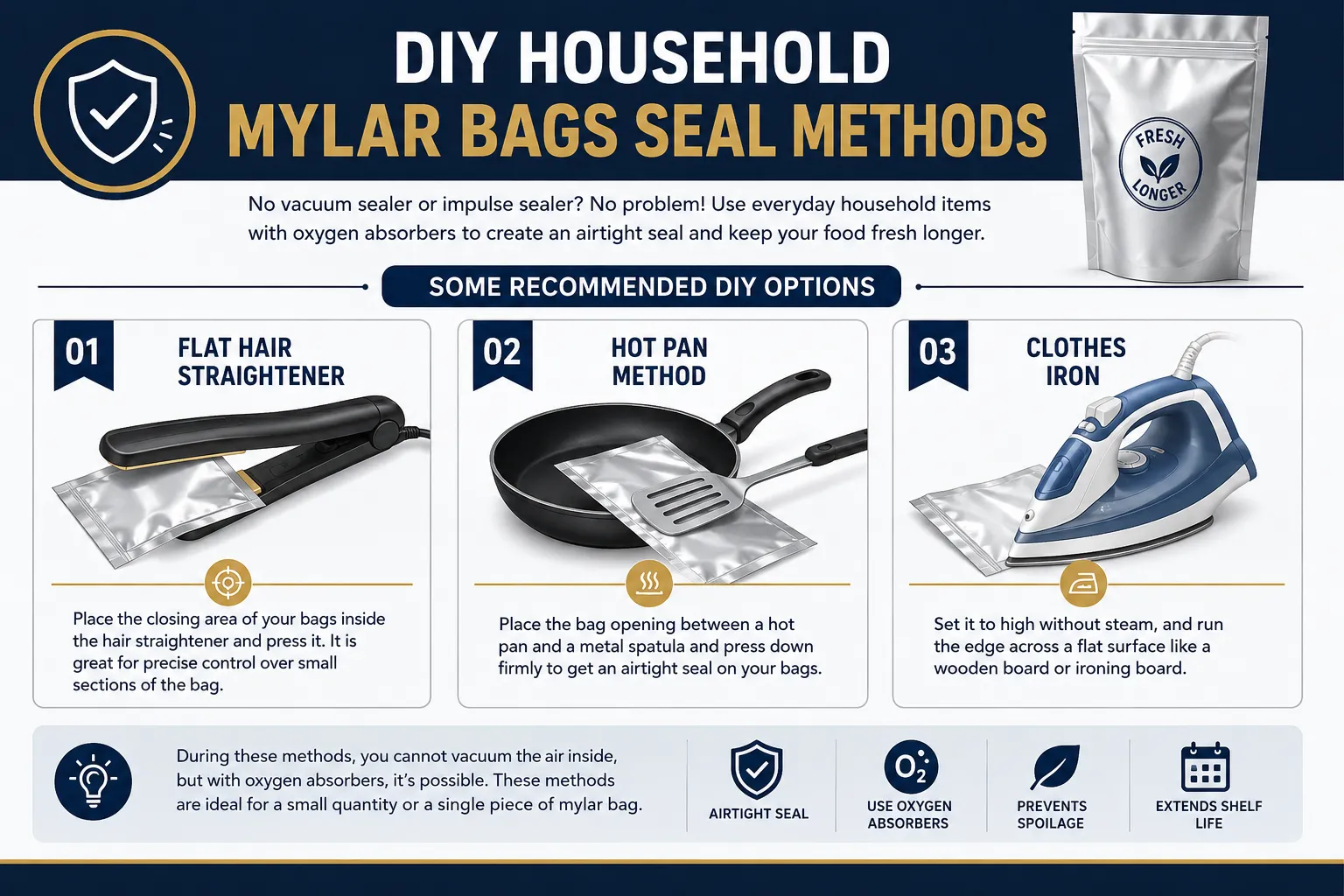
Some Recommended DIY Options
- Flat Hair Straightener: Place the closing area of your bags inside the hair straightener and press it. It is great for precise control over small sections of the bag.
- Hot Pan Method: Place the bag opening between a hot pan and a metal spatula and press down firmly to get an airtight seal on your bags.
- Clothes Iron: Set it to high without steam, and run the edge across a flat surface like a wooden board or ironing board.
During these methods, you can not vacuum the air inside, but with oxygen absorbers, it’s possible. These methods are ideal for a small quantity or a single piece of mylar bag.
Sealer Selection Guide
Choosing the right sealer depends on how often you plan to use it and the bag size. Here’s a breakdown:
- Occasional Use: The FoodSaver link with the nested method works very well. Just make sure you understand how to vacuum-seal Mylar bags using a FoodSaver.
- Regular Use: If you seal frequently, consider a handheld impulse sealer, affordable and reliable.
- Heavy-Duty: For bulk storage, like when sealing 5-gallon Mylar bags, choose a chamber or snorkel vacuum sealer.
Look for a machine that has:
- Adjustable temperature control
- Wide sealing width (10mm or more)
- Compatibility with thick materials
Some high-end models can seal both plastic vacuum bags and Mylar, offering great flexibility for various food storage needs.
Seal Quality Checks
- After sealing, always check your bag for air leaks and seal quality:
- Press around the seal to ensure it’s firm and tight.
- Look for wrinkles or incomplete seal lines.
- Gently tug the edges to ensure the seal holds.
- After 12–24 hours, check if the bag has become tight around the food—this means oxygen absorbers are working.
If the bag still feels poor, the seal may have failed, or the oxygen absorbers may be spent. In this case, you should reopen, reseal, and replace the absorbers. Learning this step correctly is crucial for long-term food safety.
Conclusion
Getting an in-depth yet professional guide about how to seal mylar bags is vital for packaging manufacturers and product producers. In this way, produce can remain safe from contamination, and brands can get more benefits. Whether you want to know how to vacuum seal 5-gallon mylar bags or 1-gallon bags, we have provided the best solutions. If you have a low budget or do not have any sealers in your reach, you can get benefits from iron and other household items to seal your bags.
Do you want to purchase custom mylar vacuum seal bags with superior quality and at affordable rates? Contact The Box Zilla. Our bags are ideal for preserving the taste and freshness of your products.