Skip to content
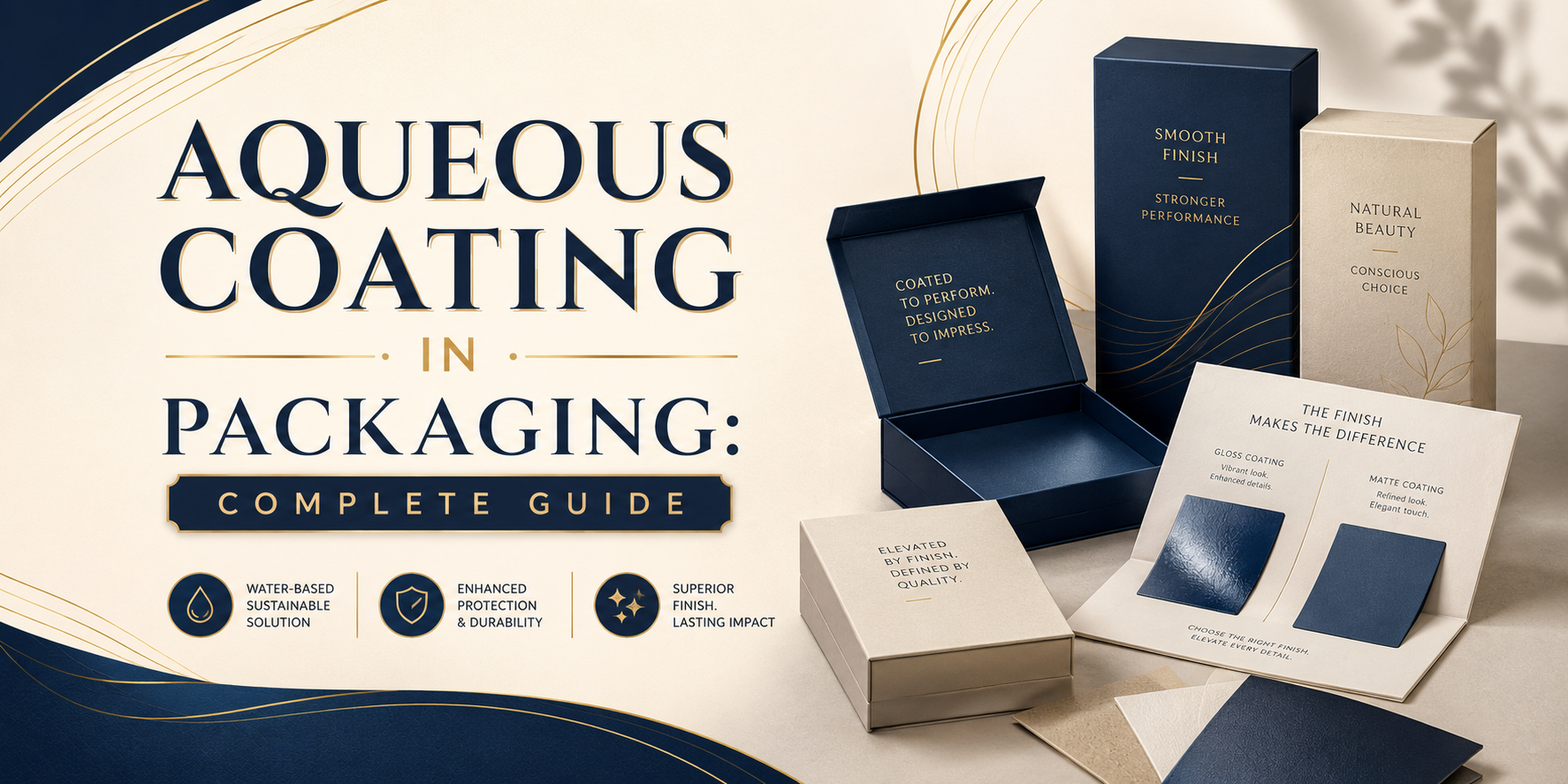
Your product packaging is the first thing a customer sees before they even know the quality of your product. And it only takes less than seven seconds for them to perceive your product’s quality, right from its packaging.
When it comes to convincing those customers, Aqueous coating comes up as one of the popular finishes for product packaging.
But what exactly is an aqueous coating, and what makes this fiish ideal for product packaging? Let’s find out in detail.
What Exactly Is Aqueous Coating?
Also called AQ coating, it is a water-based protective layer applied to printed materials to protect them. Think of it as a liquid shield that keeps the ink from getting messed up and makes the colors on your packaging look more vibrant.
The best part about AQ coating is that it is water-based. Thus, it is very thin and clear. Plus, it does not contain any toxic chemicals.
The main process of AQ coating uses water, special mixtures, polymer emulsions, and specific additives. When the coating is applied, the water leaves a hard layer plastic-like film.
How the Aqueous Coating Process Works?
The application of AQ coating is an inline engineering marvel. This means the coating is applied directly on the printing press immediately after the ink is laid down on the material.
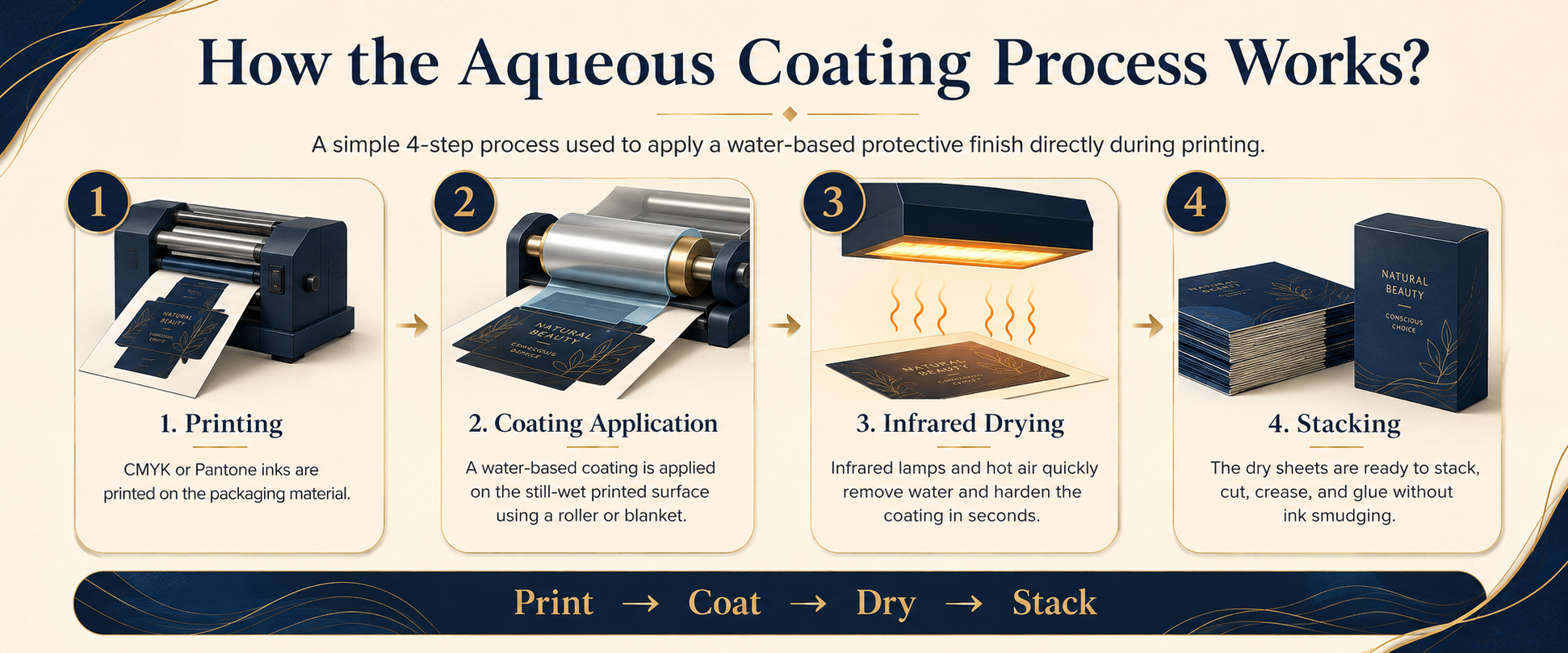
Let’s have a look at the entire process of Aqueous coating.
- Printing
The offset press uses CMYK or Pantone inks on the packaging material.
- Coating Application
While the ink is still wet, the paper will go through a coating machine. Using a roller or blanket, the coating machine will then apply a liquid, water-based mixture to the surface.
- Infrared Drying
Next, the coated sheet passes under infrared lamps and hot-air blowers. The high heat quickly removes the water from the coating and hardens the polymers in seconds.
- Stacking
The sheets come out completely dry. At this stage, they can easily be stacked, cut, creased, and glued away without leaving any ink smudging.
Types Of AQ Coating
AQ coating comes in different, excellent types you can choose from, depending on how you want to design your custom boxes.
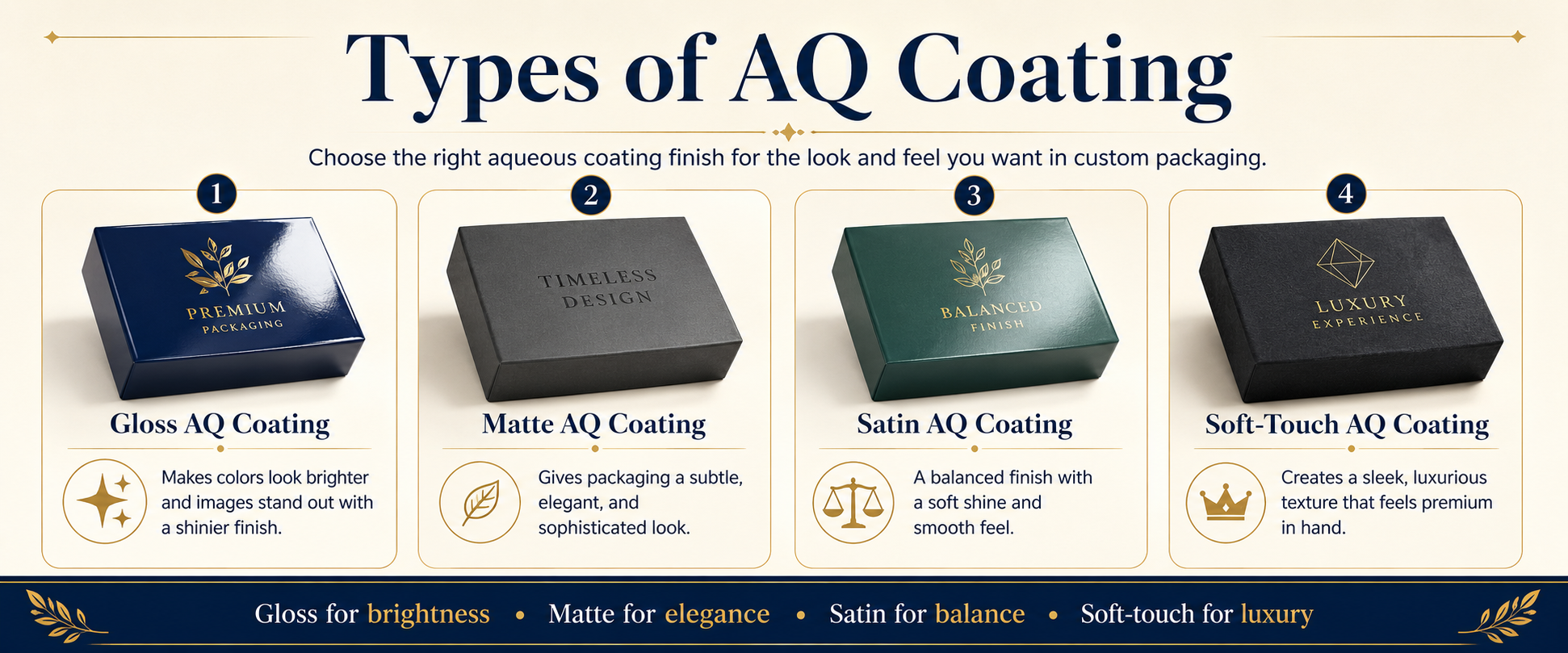
- Gloss AQ Coating: This type makes bright images stand out and makes your packaging design look shinier.
- Matte AQ Coating: Matte AQ coating can make your product packaging look subtle, elegant, and sophisticated in customers’ eyes.
- Satin AQ Coating: This type is in between. Satin AQ coating delivers a shiny look and gives your packaging a smooth feel to the touch.
- Soft-Touch AQ Coating: Soft-touch AQ coating is perfect to delight customers with a sleek, textured product packaging that feels luxurious.
Compatible Materials
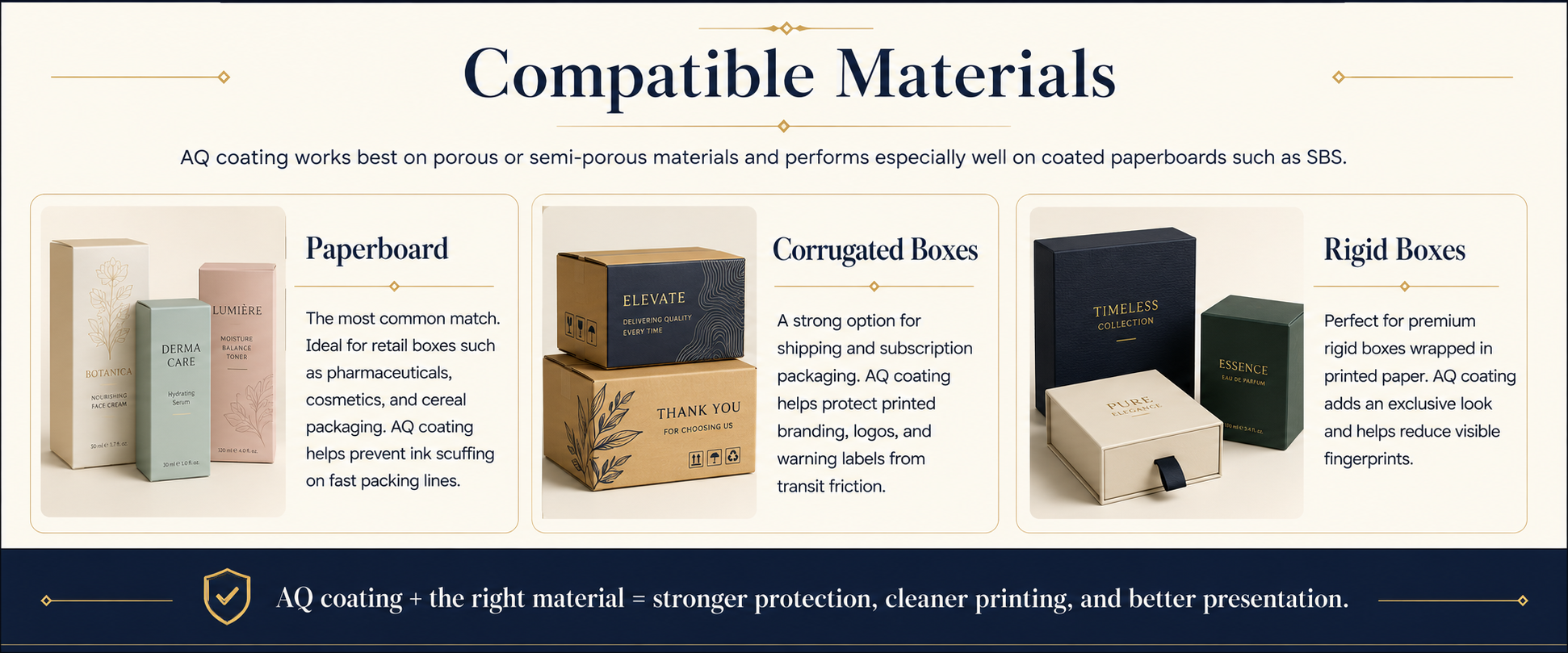
AQ coating is highly flexible. However, they require a porous or semi-porous base material to deliver the best result. They perform exceptionally well on coated paperboards (such as SBS) used across various structural designs.
Paperboard
This is the most common match. Lightweight retail boxes for pharmaceuticals, cosmetics, and cereal rely on AQ coating to prevent ink scuffing during high-speed automated packing lines.
Corrugated Boxes
Shipping and subscription boxes require heavy-duty stamina. Applying an AQ coating over printed corrugated boxes ensures that the friction of transit won’t scrape away your branding, logo, or warning labels.
Rigid Boxes
AQ coating makes premium rigid boxes wrapped in printed paper look very exclusive. And the best part? AQ finish helps keep fingerprints off your rigid boxes.
The Amazing Benefits of AQ Coating
Why choose an aqueous finish over alternatives? The benefits span across aesthetics, operations, and environmental ethics.
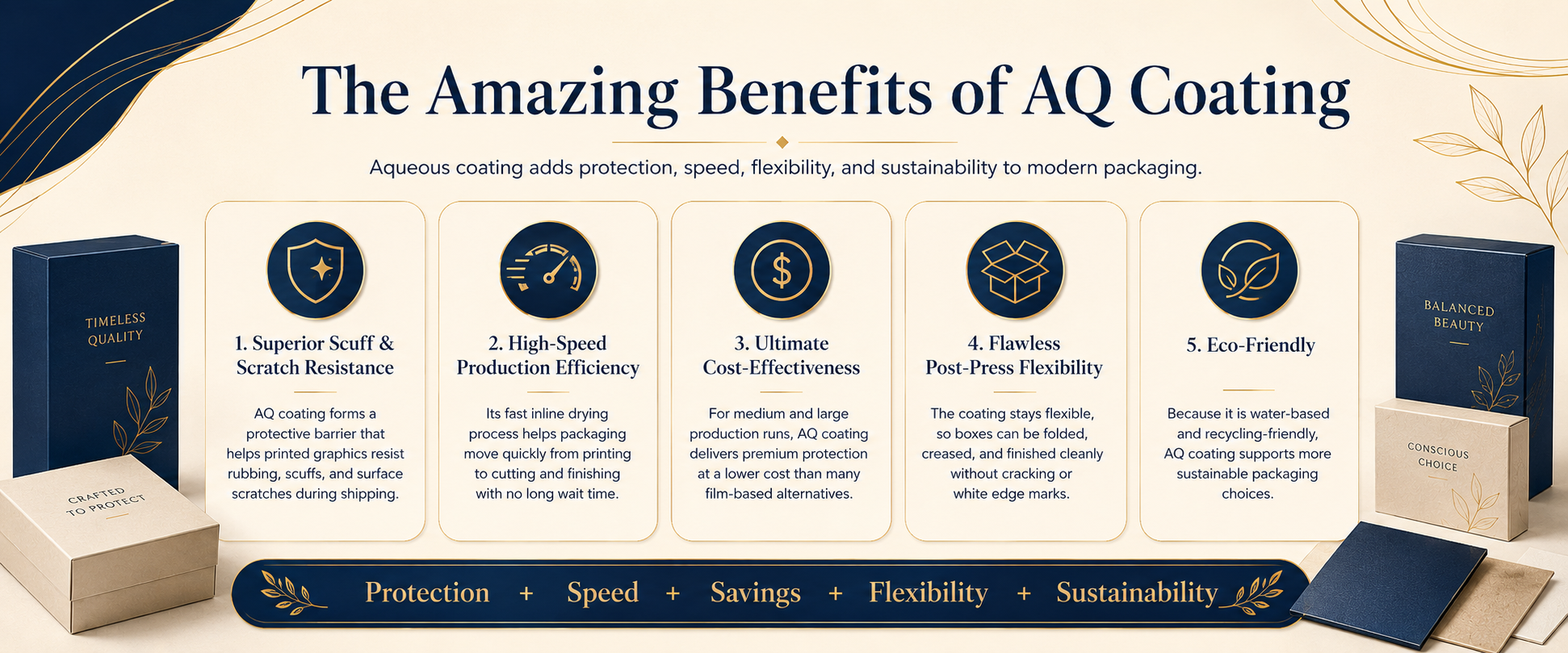
Superior Scuff and Scratch Resistance
During shipping, boxes rub against one another inside delivery trucks. Rubbing forces scratch the invisible coating rather than your beautiful printed graphics. AQ coating acts as a sacrificial barrier.
High-Speed Production Efficiency
Because the inline drying process takes only a second, packaging manufacturers do not have to wait a whole day for the ink to dry before moving on to cutting dies.
This really slashes the time it takes to get things done and gets your products out to market faster.
Ultimate Cost-Effectiveness
For medium-to-large production runs, AQ coating is incredibly inexpensive per unit. It provides premium protection without the high material costs associated with plastic film lamination.
Flawless Post-Press Flexibility
AQ coatings remain highly flexible. You can rest assured that your box edges stay clean, sharp, and free of white fractures.
Eco-Friendly
AQ coating is completely water-soluble. It does not disturb the paper repulping and recycling process of your product packaging. It is the best option if you aim for premium product packaging that is also good for the planet.
Industry Applications of Aqueous Coating
Brands across industries rely on AQ coating to trigger psychological reactions from buyers.
Here’s where Aqueous coating stands out.
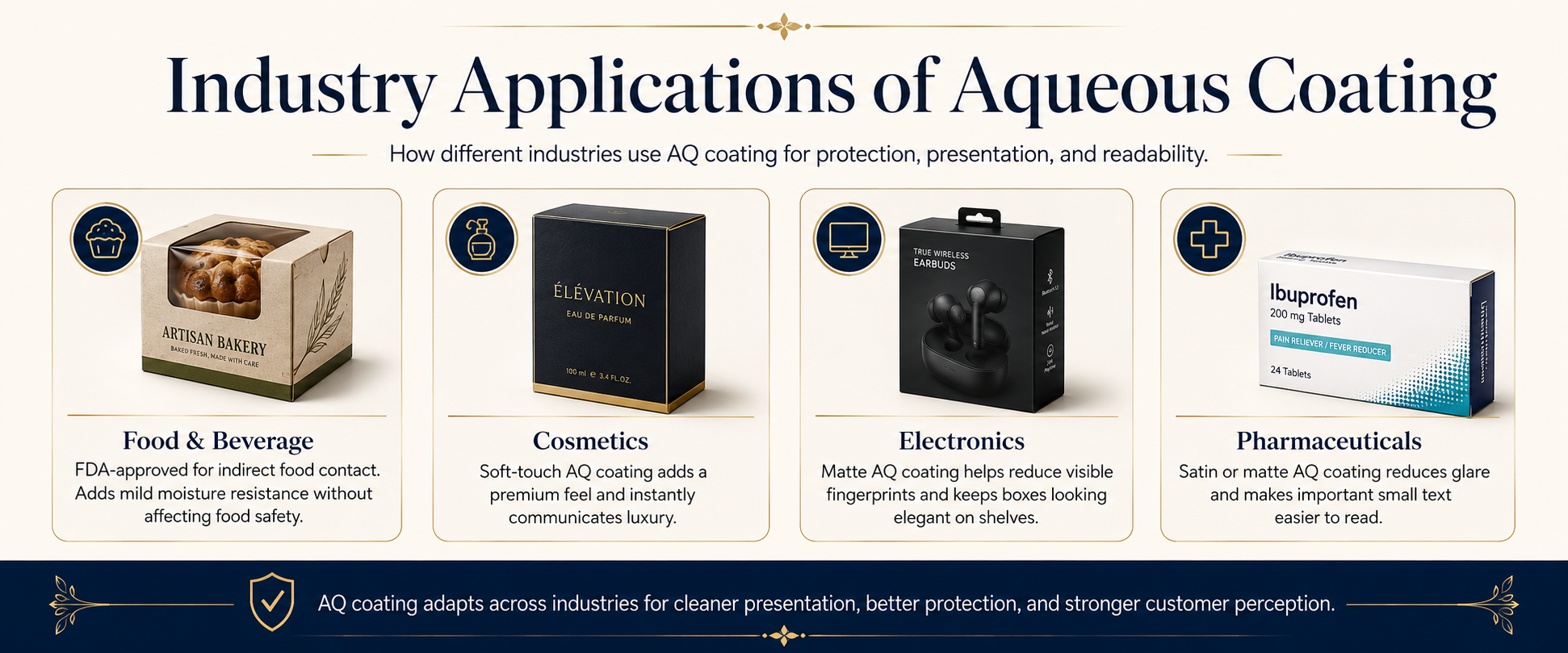
Food and Beverage
AQ coating is FDA-approved for indirect food contact. You will see many food boxes and bakery packaging applied with this finish. One of the significance of aqueous coating in packaging and printing is that it provides mild moisture resistance without contaminating the food.
Cosmetics
Soft-touch AQ finish is quite popular for exclusive cosmetic boxes and luxury perfume packaging. When you apply this finish, your box will communicate a sense of luxury within seconds.
Electronics
High-tech brands choose matte AQ coating to prevent oily fingerprints from ruining their electronic boxes. This coating ensures every electronic item is presented with an elegant look on display shelves.
Pharmaceuticals
A satin or matte AQ coating helps pharmaceutical brands reduce harsh glare from retail lighting. And speaking of medicine boxes, this finish makes the small text easy to read.
The Takeaway
No doubt, your product packaging is the first thing a customer sees before they even know the quality of your product. An aqueous coating comes up as one of the popular finishes you should choose.
This water-based coating provides tremendous benefits, including superior scuff and scratch resistance, high-speed production efficiency, cost-effectiveness, flawless flexibility, and eco-friendliness.