Skip to content
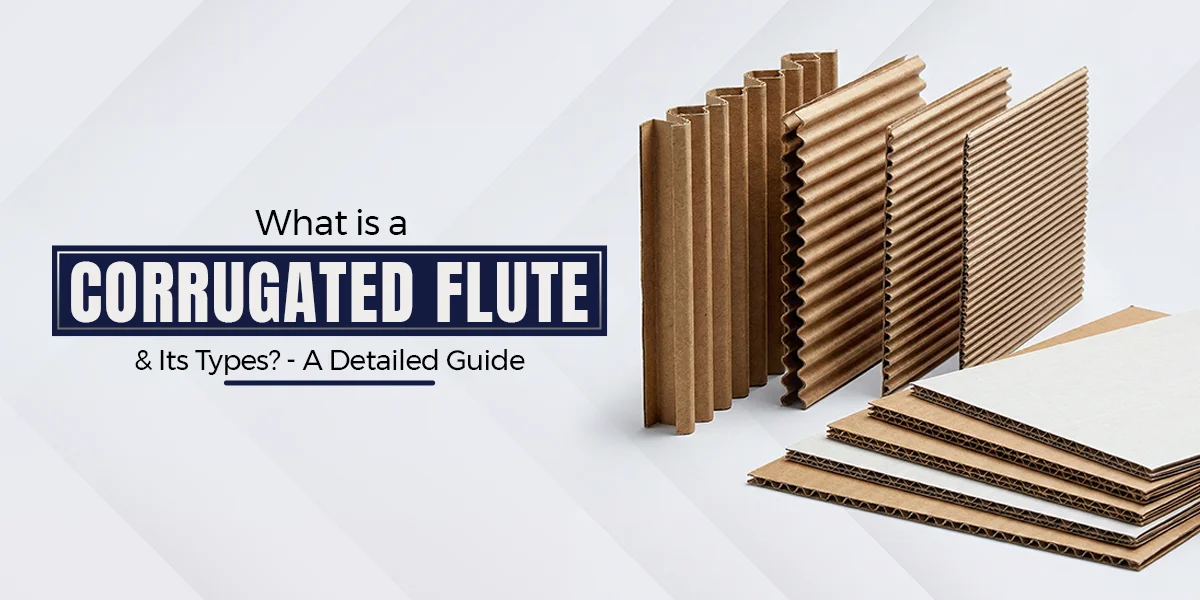
What are corrugated flutes? Have you ever seen a corrugated shipping or storage box? If the answer is yes, then definitely you have seen the wavy structures. These wave-shaped structures are found in the core of corrugated cardboard. This is called the flutes and plays a critical role in enhancing the packaging strength, cushioning, and thickness of the material. In simple words, a box made of corrugated cardboard consists of two plain or flat sheets of paper and one or more than one wavy flutes.
To improve the performance of cardboard, especially to increase the load-bearing capacity, preservation, and durability, these flutes are used. During transportation, shipping, and stacking, these flutes’ work is a gem. These flutes not only provide immense strength to your corrugated cardboard boxes but also enable them to absorb shocks, ensuring your fragile products arrive safely at their destinations.
What is a Flute Board in Packaging?
Flute board, also known as corrugated board, that houses the flutes. The flute board is the core of every corrugated packaging solution. If we further explain it. It consists of three layers. Two outer layers of plain kraft or cardboard and a middle layer of flutes. This board is the backbone of corrugated packaging and provides all the needed durability and flexibility.
Now, let’s talk about the impact of the flute board on packaging performance. It influences the box’s strength, cushioning ability, and wall thickness. Flutes have space between the waves, and this determines the strength and load-bearing capacity of any corrugated box. Larger or taller flutes offer impressive strength, while smaller flutes are ideal for lightweight, compact packaging. If you want to offer proper packaging performance during shipping and transit, then you must choose the right flute type. Stick to the topic, and you will find the right way to select the ideal flute type for your packaging solution.
Understanding Corrugated Flute Sizes
In the packaging industry, every flute serves distinctively. The purpose of each flute is different, so its size is. The flute size refers to the height of the waves and the spacing between the flute boards and other flutes. Flute size is a combination of flute height and flute pitch, which is the number of waves per inch. It can range from large to small, from thicker to tucker flutes, and each affects the packaging strength, cushioning, and flexibility of the cardboard.
Brands and businesses select different flute sizes based on packaging needs and product volume. If you need a corrugated box for stacking or shipping, you need one with larger flutes; if you just want it for small items, smaller flutes will work. You must select the right packaging size with an accurate flute to maintain a balance between durability, functionality, and practicality.
How Flutes Determine The Thickness of Corrugated Cardboard?
As we have mentioned before, the fates are directly responsible for the thickness of the corrugated cardboard. It is their height that actually determines how thick the cardboard will be. And that turns the impact of packaging’s protective qualities and capabilities. Also, it is the flute height that determines how much a packaging box absorbs shocks, provides cushion, and maintains structural integrity under pressure.
Let’s try to understand it with a proper example. Thick flutes are perfect for packaging heavy products and need some extra protection from cushioning forces. Now, the thinner flutes are ideal for lighter, smaller goods and do not require any extraordinary protection, but they do require a smooth surface to print all branding elements.
If we simplify it, the thicker flute represents greater preservation and durability. Choice of flutes always depends on how well the packaging needs to perform under harsha nd unpleasant conditions.
Some Common Types of Corrugated Flutes
When it comes to categorizing the flutes, it’s mainly by their size. Each flute type provides a different combination of strength, cushioning, and printing capabilities. Let’s disclose some of the most common flute types to understand them better.
- B Flute – With reasonable cushioning and excellent stacking strength, the B flute comes at the top of the list. It is best for heavier product packaging as it offers compression strength.
- C Flute – If you are looking for a balanced outcome regarding strength and cushioning, then the C flute is the perfect choice. For shipping boxes, it is one of the most used options.
- D Flute – Compared to flutes B and C, the D flute is more flexible and ideal for packaging lighter products. It is perfect for products that do not need much protection during transit.
- E Flute – For retail packaging and display, the E flute is a perfect option. It offers a smooth, compact surface and printing capabilities.
- F Flute – This ultra-thin flute is ideal for premium packaging of lightweight items. It offers an excellent balance of smooth printing capabilities and is ideal for small and delicate products.
A Little Explanation Of Flute Thickness
As we mentioned before, each of the flutes come in a different thickness range. It influences the performance of the corrugated cardboard.
E Flute Corrugated Cardboard Thickness
The thickness of the E flute typically falls between 1.5 mm and 2.0 mm. It offers a smooth surface for printing all branding elements. Although it is flexible, it offers you decent product protection.
F Flute Thickness
The F flute comes in a 1.0-1.2 mm thickness, making it the thinnest flute available. For ultra-lightweight product packaging with ultimate visual appeal, this flute type is good.
With different flute thicknesses, all the flutes express their weight-bearing capacity and printing capabilities. By understanding the flute thickness, you can select the right type of flute for your product packaging, shipping, and display.
Let’s Compare Some Flutes
B Flute vs C Flute
For stronger stacking capabilities, the B flute is good. For heavy-duty applications, it is the best flute type. But the C flute is strikingly good for balancing the strength and cushioning. It is good for protecting fragile products during shipping.
E Flute vs B Flute
E-flute is used to package retail products and offers a smooth surface for printing all branding elements and graphics. On the other hand, the B flute is ideal for shipping.
The choice between these flutes highly depends on your preferences. Either you want strength or balance between durability and aesthetics.
Choosing The Right Corrugated Flute
Want to use the perfect corrugated flute for your packaging? Then you have to keep a few things in mind. What is your product? Its weight and fragility? If you know these things, then you will be able to get the perfect match for your product packaging.
Protection vs Print Quality
Thicker flutes, such as B or C are ideal for keeping your products secure. Also, its print quality is good, and it can accommodate all the branding elements.
Shipping vs Retail Display
E and F are flutes with higher strength and are also perfect to display on shelves. You can not only protect your products during shipping but also make them stand out among many.
Cost vs Performance
The thicker the flute, the higher the price. Thinker flutes are more expensive than the thinner ones. As a brand, you should balance the cost vs performance of your product packaging.
Also, you need to go to a responsible, trustworthy, and professional packaging supplier who understands what is corrugated packaging? which is The Box Zilla. You will get the right flute custom corrugated boxes for shipping and displaying from them at wholesale rates, free shipping worldwide, no order limit, and many more.
Conclusion
What is the backbone of corrugated packaging? I would swiftly respond to that by giving you the answer. Corrugated flutes are the answer. It is insurance for products to ensure they are safely transported and handled through all kinds of rough and bumpy rides and mishandling in storage. If you understand the differences among all kinds of flutes, it will be easy for you to choose the appropriate one based on your product weight, volume, distance, and shipping or transit medium.
If you are a business and want to consider different flutes, this article is for you. Types, thickness, and role in packaging help you optimize your business in a cost-effective yet protected way. Product manufacturers must choose the right flute type, keeping preservation, elegant product presentation, and brand elevation in mind.
You want to make your product secure using the right corrugated flute. Come to The Box Zilla for the most aesthetically pleasing and resilient corrugated shipping boxes in record time.